
Where design meets accountability

Packaging is no longer judged by appearance or efficiency, but by its measurable impact across systems, where design, regulation and commercial consequence now converge, says Sema Tezel Basbug, Head of Marketing at London Packaging Week.
This is the defining shift. Packaging is increasingly understood as the outcome of interconnected decisions, including material, structure, logistics, storytelling and end-of-life, all compressed into a single measure of value. It is a perspective gaining traction across the industry and reflected in conversations at London Packaging Week, where packaging is increasingly understood as the result of wider systemic consequences.
In that recalibration, beauty is no longer the goal. It is the outcome.
From surface to system
Packaging design has quietly inverted.
Where it once began with surface expression and ended with execution, it now begins upstream, shaped by material scarcity, regulatory pressure, recyclability infrastructure and lifecycle accountability that increasingly exists outside the designer’s control.
Design extends far beyond styling an object or resolving a brief. Good design now begins with engineering consequences across systems that do not pause for creativity.
As Jo Smith, Design & Visual Identity Leader at Diageo, reflects, the most decisive constraints are often set before design enters the room.
“When I was agency side, it often felt like we were receiving a brief where some of the most important decisions had already been made. The budgets were set, timelines were locked, and technical decisions were already in place. When those things are fixed, creativity can die. And it doesn’t die dramatically. It dies very quietly and through a thousand tiny compromises.”

From objects to systems of consequence
What is changing extends beyond packaging aesthetics to its entire definition.
Packaging in 2026 is a system of interdependent decisions, each shaping outcomes far beyond the shelf and increasingly beyond the brand itself.
Material choice influences infrastructure. Structure influences logistics. Logistics influences emissions. Emissions influence regulation. Regulation feeds back into design.
Nothing exists independently anymore.
Yet crucially, this interdependence does not guarantee functionality. Systems may be connected, but they are not always capable of communicating.
“We capture 1.5 billion waste objects a day across 20 countries,” says Yaseed Chaumoo, Managing Director at Greyparrot (an AI waste intelligence platform), “but the real value isn’t volume, it’s understanding how packaging behaves in real systems, not theoretical ones.”
“We’ve spent a long time focusing on what packaging is made of. The next challenge is whether the system is actually capable of dealing with it,” says Steve Lister, Global Retail Innovation Consultant.
This shifts design from working within constraints to shaping the constraints themselves.
Because in a system-led world, omission is as powerful as creation.
Crucially, those systems have moved past being purely theoretical. Packaging performance is now measured in real-world conditions, feeding directly into cost structures, regulatory exposure and, ultimately, brand economics.
“Eco-modulation only works if it’s based on real-world data, not assumptions,” Yaseed explains. “There are cases where brands outperform their category but are still penalised because the system doesn’t see what’s actually happening.”
“We have the data, and I can compare. If you have new materials and new suppliers, show me your data,” says Daniel Nebe, Senior Manager, Package Development, Mass, AEMEA bei Kao Corporation.
Constraint as creative infrastructure
For years, sustainability was framed as a limitation placed on creativity, but that framing no longer stands up to scrutiny. Constraint has emerged as the primary engine of innovation.
When material use is reduced, structure becomes more intelligent. When components are removed, functionality becomes more deliberate. When systems are designed for circularity rather than disposal, entirely new value architectures emerge.
The creative question has shifted to what parts of packaging are no longer justified.
That question is quietly redefining modern design practice, because it sits at the beginning of what is even allowed to be designed.
This is where sustainability stops behaving like an external requirement and starts behaving like a creative origin system.
“Sustainability is no longer a filter at the end of a process but the creative spark at the beginning of it,” says Lisa Cain, European Technical Account Manager at Smurfit Westrock. “When you design with circularity and resource efficiency as first principles, you open space for new kinds of beauty and functionality.”
In practice, this shift is also about operational reality. Sustainability is increasingly understood as a driver of efficiency as much as responsibility, improving resource use, streamlining supply chains, and strengthening engagement across the value chain. In that sense, it is not separate from performance, but embedded within it.
“Sustainability offers us greater operational and resource efficiency, opportunities and drive for innovation, an impactful and streamlined supply chain, and an engaged customer base, all in service of the protection and preservation of food,” Talia Goldman, ESG Director Europe & UKI at Sabert, says, reinforcing how sustainability is becoming inseparable from commercial and functional performance.

Material innovation is rewriting the boundaries
At the material level, this shift is becoming visible in real time.
As Dewi Pinatih, Head of Product Design Trends at Stylus, notes: “Materials previously written off as environmental no-gos, like polystyrene or unrecyclable black plastic, are now entering the sustainable fold thanks to rapid advances in material innovation.”
What was once excluded is being reabsorbed into the system.
“These new bio-based, biodegradable and circular alternatives deliver both convenience and design freedom.”
Rather than achieving responsibility solely through subtraction, packaging designers can increasingly do so through reinvention. The brief is expanding into new scientific and industrial territory.
And crucially, the era of “theoretically recyclable” packaging is ending. Performance is being defined not by design intent or lab validation, but by how packaging behaves in real-world sorting environments.
Innovation as coordination, not invention
“There are a lot of people working in science looking to meet these regulations,” says Daniel. “So, you need to bring these little pieces and bits together to get to a final product.”
Innovation is becoming infrastructural. It is built through coordination across fragmented systems, including regulation, material science, manufacturing and design intent. No single discipline owns it.
As those systems fragment further, a deeper issue emerges – translation. Value is routinely being lost between ambition and execution. Not because ideas fail, but because they are not carried intact across systems that were never designed to align.
As Jo explains: “Sometimes it’s the execution of the idea and not the idea itself. Not because these ideas are wrong, but because nobody is translating them.”
This is where design leadership becomes decisive as a systemic connector. The most effective design leaders operate across both worlds – ambition and reality, creative and consequence.
Leadership, then, becomes the act of making trade-offs visible, structured and intentional, rather than allowing them to disappear in transition.

Desirability has replaced escalation
One of the most visible cultural shifts is how value is communicated.
The era of louder, heavier, more complex packaging is fading.
As Gaby Granier, Associate Director of Strategy at Boundless Brand Design, explains, “Shouting louder is a strategy that rarely wins, especially in a crowded marketplace.”
Instead, value is constructed through coherence, clarity and restraint.
“That’s why we focus on building worlds, strategic and creative spaces designed to attract attention rather than compete for it.”
Packaging becomes an entry point into a wider system of meaning.
And within that system, longevity becomes a form of sustainability.
“We take pride in designing objects people actually want to keep.”
What is kept stops circulating as waste. What endures stops needing replacement.
“We never separate design from performance,” adds Jane Struk, Creative Director at ARD Agency. “Our approach is grounded in strategy and expressed through design… delivering measurable value in visibility, choice, market share and business scale.”
The structural problem of timing
Despite progress, sustainability is still too often introduced at the wrong moment, as validation rather than origin.
“We can compare what brands think is happening with what actually shows up in waste streams,” Yaseed adds. “In some cases, it overlaps; in others, it doesn’t. And that gap is where the opportunity is.”
Nick Vaus, Co-Founder and Managing Partner of Free the Birds, said: “We treat sustainability as a design constraint that drives creativity rather than limits it. The most effective approach is close collaboration with suppliers and manufacturers, ensuring ideas are grounded in real feasibility and balance responsibility with performance, cost and aesthetics.”
Fragmented optimisation becomes systemic coherence.
Alongside this, evidence has emerged as a new expectation, and sustainability is increasingly led by verification.
This is occurring against a background where structure is becoming a defining differentiator in its own right. As Vaus puts it: “That’s where structure becomes a powerful differentiator. The silhouette of a pack, its form, proportion, and physical presence, can create immediate recognition and memorability, often before branding or messaging is even processed.”

Regulation, constraint and creative pressure
Regulation is now a direct driver of design behaviour, rather than an external condition outside it. Frameworks such as pEPR and PPWR embed constraints earlier and more explicitly into the development process, reshaping how decisions are made before creative expression even begins.
“Regulation is definitely reshaping creative decision-making. The development of pEPR and PPWR, amongst other regulations, is bringing an increasing number of design constraints into the packaging development process,” Talia highlights.
However, rather than simply narrowing options, this pressure is also accelerating innovation. Constraint becomes a forcing function, requiring designers and manufacturers to actively solve for complexity and, in doing so, fostering a form of productive competition.
“However, this can help to really drive innovation, pushing designers and manufacturers to solve the challenges pushed forward by these constraints – and engage in a bit of healthy competition,” she continues.
Even with alignment, the system does not simplify.
“It’s crazy,” adds Daniel. “There’s so much to think about. The world is becoming increasingly complex. You cannot check all the boxes.”
There is no perfect version of sustainable packaging—only contextual optimisation within constraints.
“You can cover the majority, but you need to decide with your marketing team what fits a certain brand.”
Sustainability, then, needs to be considered strategically rather than as an absolute measure.
As Sarah Leech, Head of Packaging Design for Home Care at Unilever, notes, this complexity is not abstract but practical and cumulative in its consequences. “You can’t just say, ‘we’ll put liquids in paper,’” she cautions. “Will it get collected? Will it get recycled? Will it biodegrade? These are end-to-end system problems.”
The question is no longer what packaging is, but how it performs within the systems that surround it.
Where design meets accountability, packaging stops being something we evaluate at the surface and becomes something measured in outcomes – material, commercial and environmental. Packaging shifts from something we see to something that works.
These are the questions set to define the agenda at London Packaging Week on 16 & 17 September 2026, as the industry increasingly turns its attention from individual packaging formats to the wider systems that determine their impact.
And in that shift, the future of packaging will not be shaped by objects alone, but by the systems that support them.
Check out our socials
Lorem ipsum dolor sit amet, consectetur adipiscing elit Lorem ipsum dolor sit amet, consectetur adipiscing elit
The latest packaging projects
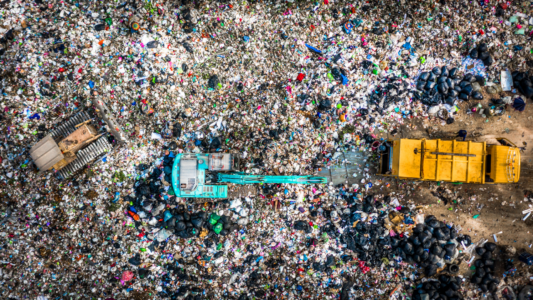
Is pEPR creating more packaging waste than it prevents?
Extended Producer Responsibility (pEPR) has moved from being a future regulatory requirement to an active business cost for UK food and drink producers. With invoices now being issued and further reporting deadlines approaching throughout 2026, packaging decisions are becoming increasingly important not only for sustainability but also for managing compliance costs.
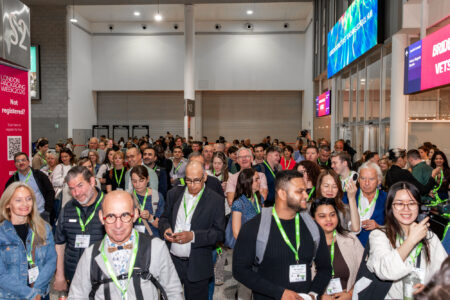
London Packaging Week smashes attendance record with 16% growth in 2026
A record 6,688 unique visitors attended London Packaging Week 2026, as more than 230 exhibitors and over 110 speakers helped deliver the biggest edition in the event’s history.