
The age of proof
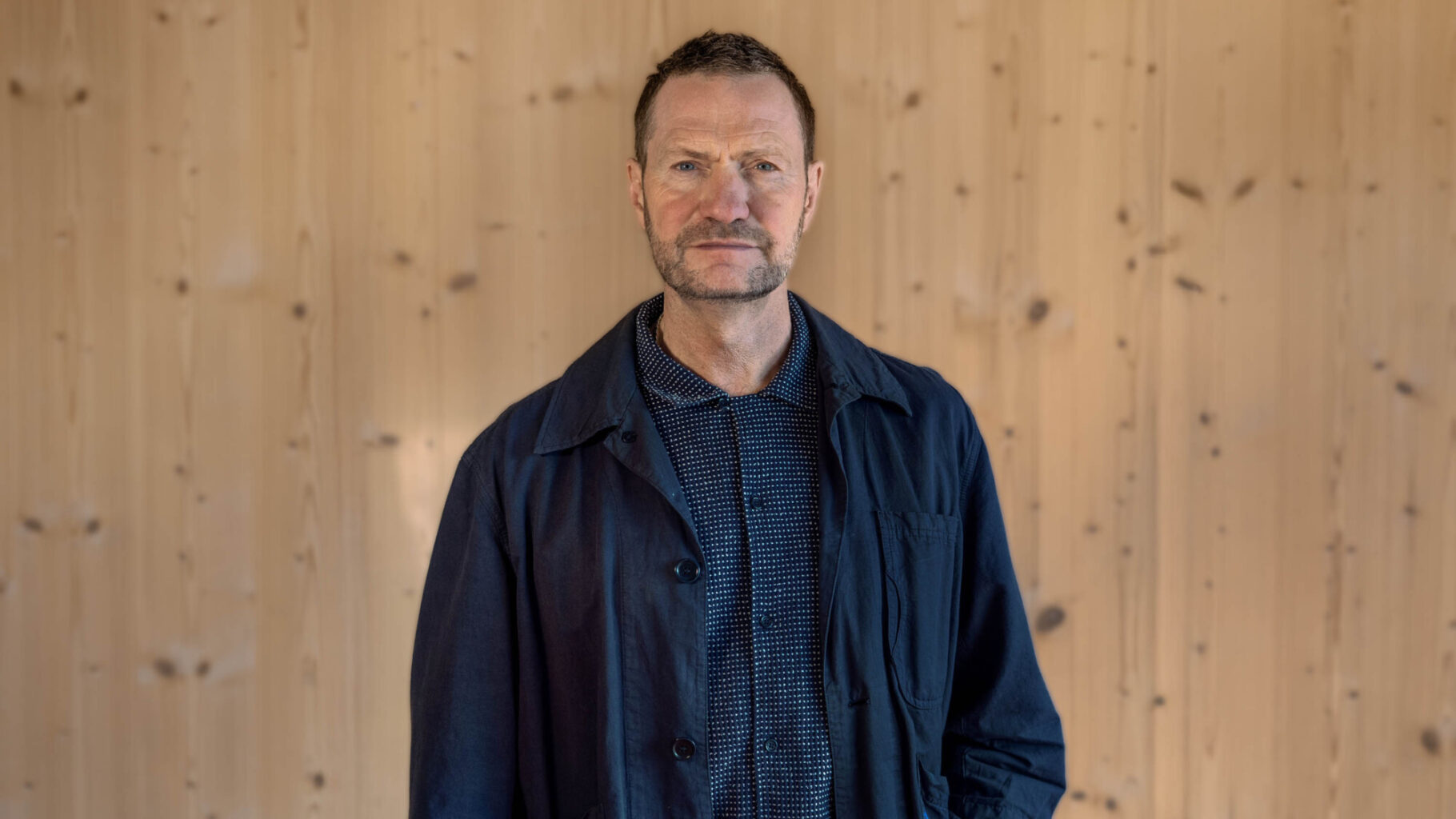
Christopher Sanderson, speaking at London Packaging Week, on how proof is reshaping packaging, branding and consumer trust
Christopher Sanderson has spent much of his career looking slightly ahead of where the market thinks it is. As co-founder and chief creative officer of The Future Laboratory, his vantage point is unusual: part cultural analyst, part creative director, part interpreter of how consumers quietly change their minds before brands notice.
But for Sanderson, the most important shift underway today is not aesthetic, digital or even technological. It is epistemological. It is about what counts as proof.
A career shaped by product, design and packaging
“My official role titles at The Future Laboratory are co-founder and Chief Creative Officer,” he explains, “so as well as leading our roster of international keynotes and speaking engagements and running a business, I manage the creative team.”
His background, however, predates strategy decks and trend reports. “My background is in creative development. I used to be a creative director and have always been really closely aligned with product development and product design,” he says. That proximity matters. It places packaging not at the end of the value chain, but at its most expressive point.
“Everything that sits within that, and more specifically around graphic design, graphic identity, and all the external elements of product development around packaging,” he continues, “it kind of goes into my blood.”
There is a personal lineage too. “My dad was a product and packaging designer… within what would have been regarded as pharma or pharmaceuticals. So it’s something I’ve always been really engaged with.”
That inheritance now reads almost prophetic. Because packaging, in Sanderson’s view, is increasingly about infrastructure.

The consumer is no longer browsing – they are judging
At The Future Laboratory, the work is grounded in observation rather than assumption. “We are a proprietary research business,” he says. “We have analysts, researchers, strategists and writers constantly scanning across lifestyle sectors to understand what’s new and what’s next.”
But the deeper task involved is fast becoming behavioural interpretation. “Our focus is always on the consumer – to think and act with the mind of the consumer.”
Sanderson explores this thinking at London Packaging Week, where he is speaking on “Meet the new consumer: packaging for the age of functional health”, a session focused on how packaging is being remoulded by demands for proof, performance and functional clarity.
That mindset leads to a blunt conclusion: the consumer has changed their criteria for trust.
“There are really critical shifts going on around product, especially in health and how we relate to health,” he says. “We’re at a point where trends that have been evolving incrementally are now reaching a point where the pedal is hitting the floor.”
The consequence is pressure on both ends of the system, emotional and financial. “In increasingly squeezed categories, the question of how you produce packaging that both appeals to a consumer but also mitigates cost is absolutely paramount.”
What used to be framed as sustainability or ethics has become something more structural. “It’s no longer a moral question,” he adds. “It’s EBITDA. It’s operational reality.”
The 15% that moves everything
To understand where change begins, Sanderson returns to a long-standing model at The Future Laboratory: the diffusion of innovation curve.
“We focus on a very small subset of consumers – the 15% ahead of the curve,” he explains. “The innovators are maybe 2% to 3% of any population, then you’ve got early adopters next to them.”
Rather than abstract behaviour categories these are established behavioural archetypes – as Sanderson explains, “they’re that friend who’s always seen the new series, been to the new restaurant, already booked the band before anyone else.”
Their role is social as much as cultural. “They derive status from being transmitters of newness,” he says. “They get their bragging points from being first.”
The problem for brands is timing. “Most companies wait until something tips. But by the time it hits that peak point of the curve, it’s often too late.”
By then, the early adopters have already moved on.

A reset in beauty and wellness
Nowhere is this acceleration more visible than in beauty and wellness, categories where aspiration perhaps matters more than proof.
“What’s really interesting at the moment is that we’re seeing almost a fundamental reset within the beauty and wellness categories,” Sanderson says. “And that reset is all around efficacy.”
For decades, beauty relied on suggestion, but that world is now disappearing. “Now it’s about demonstrable effect,” he says. “Retinol, peptides – these were early signals. But fast forward to GLP-1s and semaglutides, and you have something radically changing how consumers think about consumption itself.”
The implication is broader than skincare. “Everything is around proof,” he says. “Nearly half of UK and US consumers now cite clinical effectiveness as their top purchase factor.”
The language of branding is collapsing under that pressure. “If I’m saying something is ‘natural’ or ‘clean’, these are just words. They are not proof points.”
And without proof, they are losing authority.
The end of influence as we know it
That shift is also changing how trust is distributed.
“We’re still very much focused on influencer marketing,” Sanderson notes, “but celebrity influencing, you could broadly say, is dead.”
He is careful not to overstate extinction. “It’s never going to completely go away,” he says, “but that huge spike we’ve seen over the last decade has peaked.”
In its place, authority is fragmenting and re-forming. “Consumers are not turning to influencers for trust points in wellness anymore,” he explains. “Instead, we’re back to verified experts, accredited peer communities and clinical data.”
Brands are adjusting accordingly. “We’re scraping data ourselves. We’re using AI and tools in order to conduct research at a level we never could before.”
The result is a different kind of marketing altogether. “It’s no longer science as marketing,” he says. “It’s trust architecture.”
A shift in what packaging does
Perhaps the most radical change, however, is happening on shelf.
“I think packaging is becoming more proactive,” Sanderson says, “in its ability not just to communicate what the brand stands for, but to demonstrate its function as part of what the brand delivers.”
He pauses on a key distinction. “It stops communicating about the product and starts being the product.”
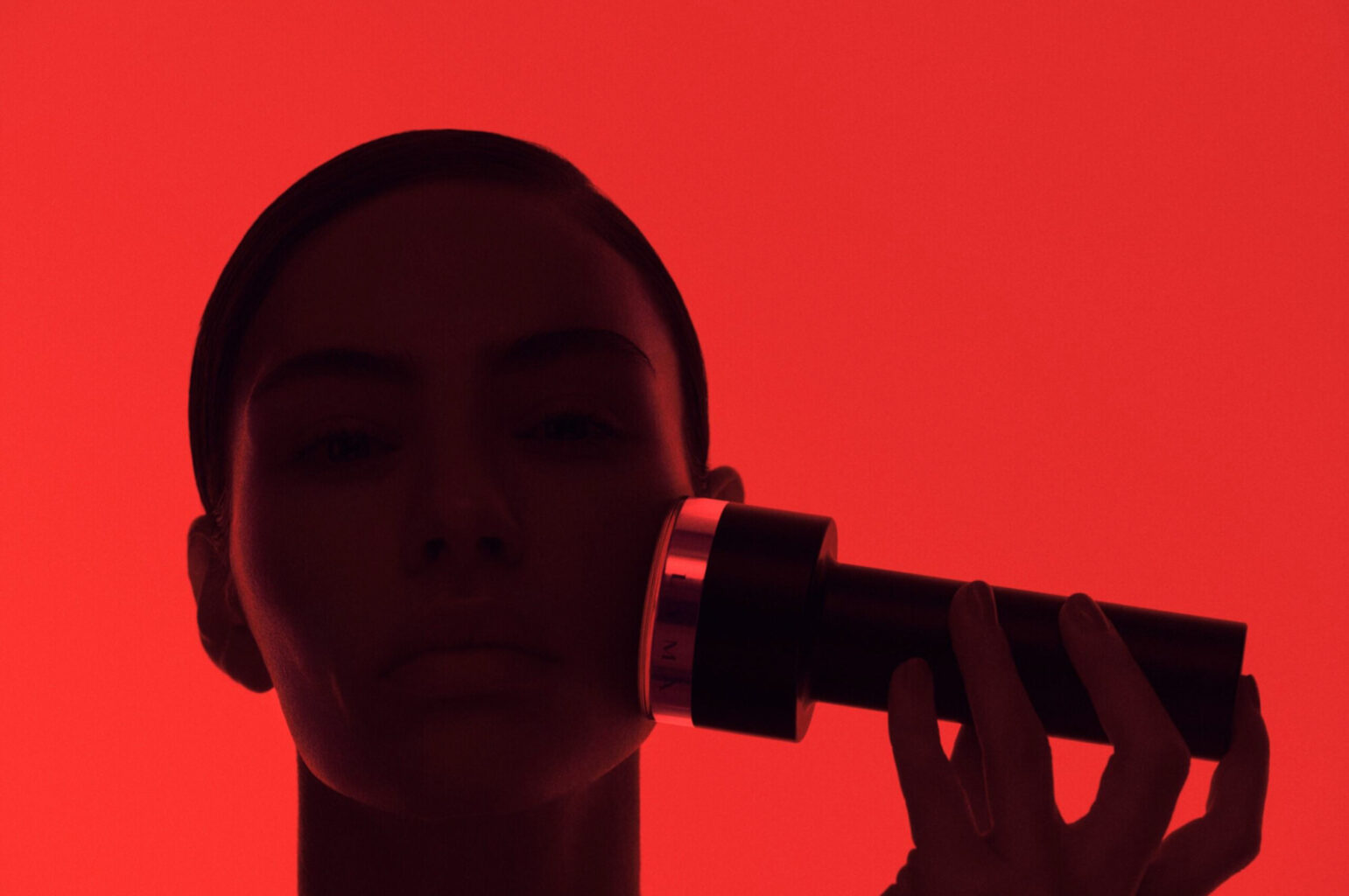
The implications are already visible. He points to LYMA, whose antimicrobial copper vessel is part packaging, part protection system. Or Seed, where dark glass preserves probiotic viability.
“Packaging is doing a job,” he says. “It doesn’t need a claim. It makes the claim redundant.”
These are the kinds of shifts that are now shaping debate across the industry, including at London Packaging Week, where packaging’s role as key functional infrastructure is increasingly coming to light.
Even sustainability, long reliant on messaging, is shifting into material proof. “Increasingly, products are demonstrating sustainability through reuse, not rhetoric.”
The logic is simple: function replaces language.
A market defined by diffusion
This reframing extends into business models themselves. Beauty Pie, for instance, removes traditional mark-ups through a membership system.
“You pay for the product, not the brand theatre around it,” he says. “They go to the best labs, the best manufacturers, and strip out unnecessary cost.”
Yet even here, identity is not removed, only recalibrated. “Some of their products are beautifully packaged,” he notes. “But the value is in clarity.”
Across the wider market, hierarchy is dissolving. “We’re seeing less dominance from traditional players and more diffusion, thousands of smaller brands with specific expertise.”
The consequence is structural. “It’s easier than ever to move from idea to product to market,” he says. “But harder than ever to hold attention.”
The quantified self still doesn’t know what to do with itself
The same tension plays out in data and health.
“There are now over 287 million quantified self users globally,” Sanderson says. “Biohacking is projected to reach $100 billion by 2034.”
Yet accumulation has outpaced comprehension. “We’re amassing all this personal health data and we don’t really know what to do with it.”
The opportunity, he suggests, is not surveillance but reflection. “If you can say, ‘I never knew I did that,’ that’s where engagement happens.”
He points to Spotify Wrapped as a model. “It works because it reflects you back to yourself.”
But trust remains the barrier. “We still don’t fully trust AI with personal health data,” he adds. “That’s the next threshold.”
Toward a functional aesthetic
Despite the language of disruption, Sanderson resists the idea that beauty is disappearing from design.
“This doesn’t mean packaging stops being beautiful,” he says. “It means beauty has to do something.”
The final shift, then, is not toward austerity but integration. “Every touchpoint, from packaging to product, has to reinforce purpose.”
And increasingly, that purpose is not fixed.
“We’re moving into customisable systems,” he says. “Blending, layering, personalisation. Consumers don’t just want to buy what something is. They want to decide what it becomes.”
In that sense, the future of packaging is not surface, signal or even story.
It is evidence, in every sense that now matters.
Christopher Sanderson will speak at London Packaging Week alongside more than 90 industry leaders. Complimentary tickets are available for industry professionals.
Check out our socials
The latest packaging projects
London Packaging Week smashes attendance record with 16% growth in 2026
A record 6,688 unique visitors attended London Packaging Week 2026, as more than 230 exhibitors and over 110 speakers helped deliver the biggest edition in the event’s history.
Prada, Jack Daniel’s, Heinz and Hotel Chocolat among London Packaging Week Innovation Awards winners
From Formula 1-inspired luxury engineering and interactive launch packs to everyday usability and recyclable flexible packaging, the 2026 London Packaging Week Innovation Awards reveal how brands are turning packaging into a source of practical, commercial and consumer value.