
Why luxury packaging has to earn its place
Luxury packaging is walking a tightrope. Consumers still demand theatre and storytelling, but they no longer accept the waste that often comes when indulging in creative excess. Sarah Sherring, Packaging Manager at Molton Brown, says every design decision must justify itself in an era where less is more.
Is there a better example of the joy of packaging than Christmas? When you think of Christmas, images of neatly wrapped boxes of all shapes and sizes aren’t far behind. But as Sarah Sherring warns, that joy shouldn’t be taken for granted, it can quickly turn sour when brands get it wrong.
“Last Christmas, when a friend showed me an advent calendar she’d been sent by a relative, it took up most of her dining table,” she says. “I remember thinking, ‘Where on earth is she going to put that?’ Every drawer was enormous and contained a tiny product. It felt wasteful and lazy. More importantly, I didn’t think it was responsible. We have a responsibility as packaging professionals, and I feel that weight very heavily.”
Talking about the nuances of good luxury packaging design can occasionally feel a little abstract to those outside the industry. Sarah’s story is a timely reminder that there are countless examples of its real-world impact occurring every day, for better and worse.
As Sarah prepares to take part in London Packaging Week 2026 in a panel discussion titled Beyond the bag: how packaging extends the luxury retail experience, she explores her experiences of navigating this topic as both a professional and a consumer.

Luxury is more than skin deep
“Packaging now needs a completely fresh mindset,” argues Sarah. “Awareness around recyclability, EPR requirements, and preparations for PPWR are changing the face of packaging.
“It used to have a ‘more is more’ mentality. Molton Brown is still very much about delighting the customer through gifting. We’re known as a gifting brand, and people come to us for something special. We don’t want that experience to fade, but we also have specific requirements to meet.”
This dilemma speaks to that balancing act every luxury brand must pull off. Focus too much on minimalism and risk becoming plain and joyless. But go all-in on excess, and your product could become the retail equivalent of jangling keys – eye-catching and noisy, but a hollow substitute for real depth.
That tension between excess and minimalism is a familiar feeling for luxury brands. Often, however, it manifests in cosmetic decisions, with packs differentiating themselves through the use (or absence of) embossing, foil finishes, monochrome colour palettes, or intricate printed designs. Today, brands have to think deeper about structural issues – size, shape, and functionality.
As consumer tastes and regulations evolve, every square inch of material used comes with a cost and a responsibility. Luxury, it turns out, is more than skin deep, and packaging today needs plenty of substance to back up its style. It’s up to experts to make these ideas work in the real world. “I see our role as enabling the creative ambitions of the brand team. They sit in our London office, and our job is to make those ideas production-friendly, commercially viable, and robust enough to arrive with customers in excellent condition.”
Finding the sweet spot
In short, excess has a place, but it doesn’t impress if its only purpose is to create inconvenience, waste, and environmental guilt for the consumer.
“There is a sweet spot, but it’s hard to get to,” continues Sarah. “You shouldn’t have to compromise on luxury, beauty, or aesthetics, but equally, you shouldn’t be creating something that’s an absolute monster to recycle or something that wastes huge amounts of natural resources.
“What frustrated me most about the advent calendar was that it wasn’t even user-friendly. My friend wasn’t going to do anything with it other than throw it away because she couldn’t realistically display it in her home. Modern packaging has to work with modern lifestyles. With our advent calendars, I want them to sit on mantelpieces. I want them to be showpieces. If someone spends a significant amount of money on an advent calendar, they shouldn’t have to hide it away in a spare room because it’s too large to live with. It should bring delight to the customer, and I think that is entirely achievable.”
One of the key trends in the luxury industry is the idea of packaging as a keepsake, reinforcing the connection between the consumer and brand long after the point of purchase. But to deliver this kind of value, packaging has to be something that consumers can live with. Shelf appeal is one thing, but living room appeal is quite another. It requires beauty, theatre, usability, displayability, and recyclability, not just empty glitz.
This is where the real value of luxury packaging lies, and it’s something that Sarah is keenly aware of.
Luxury you can live with
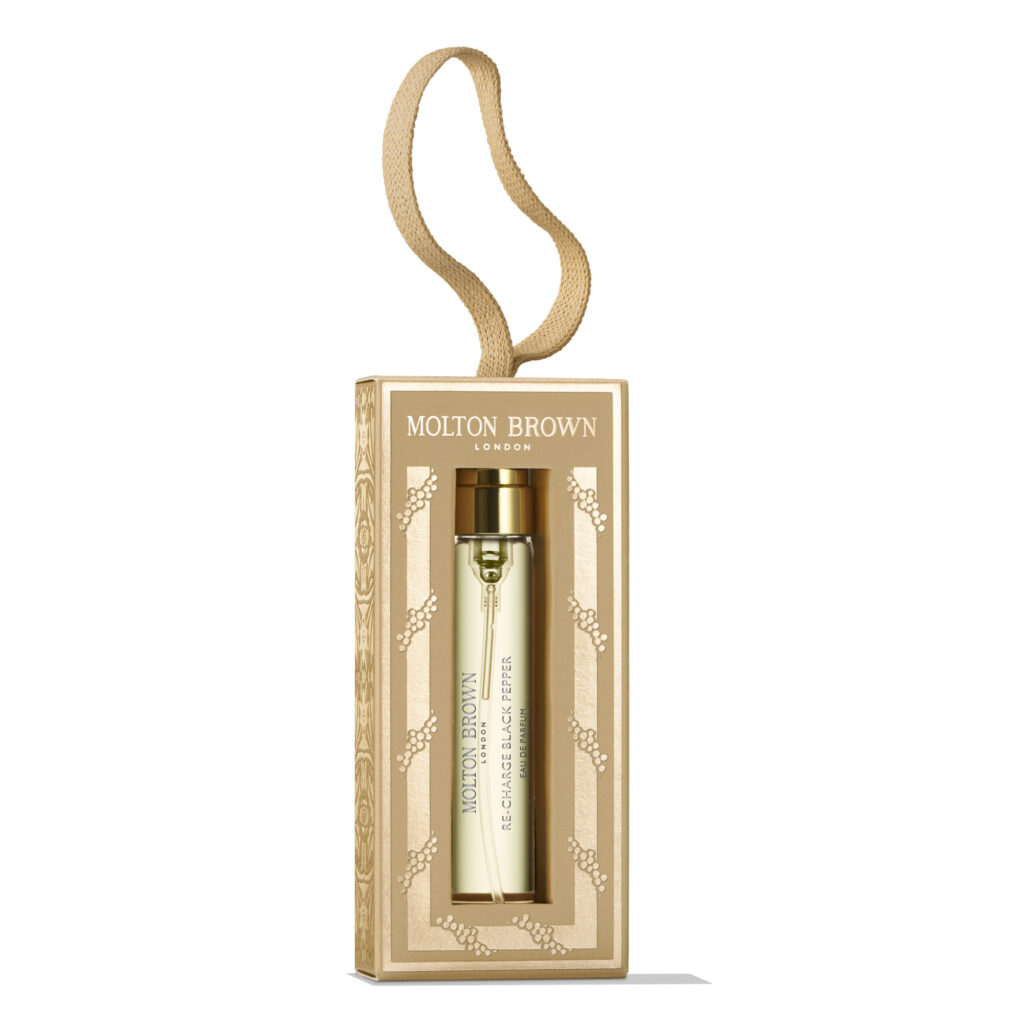
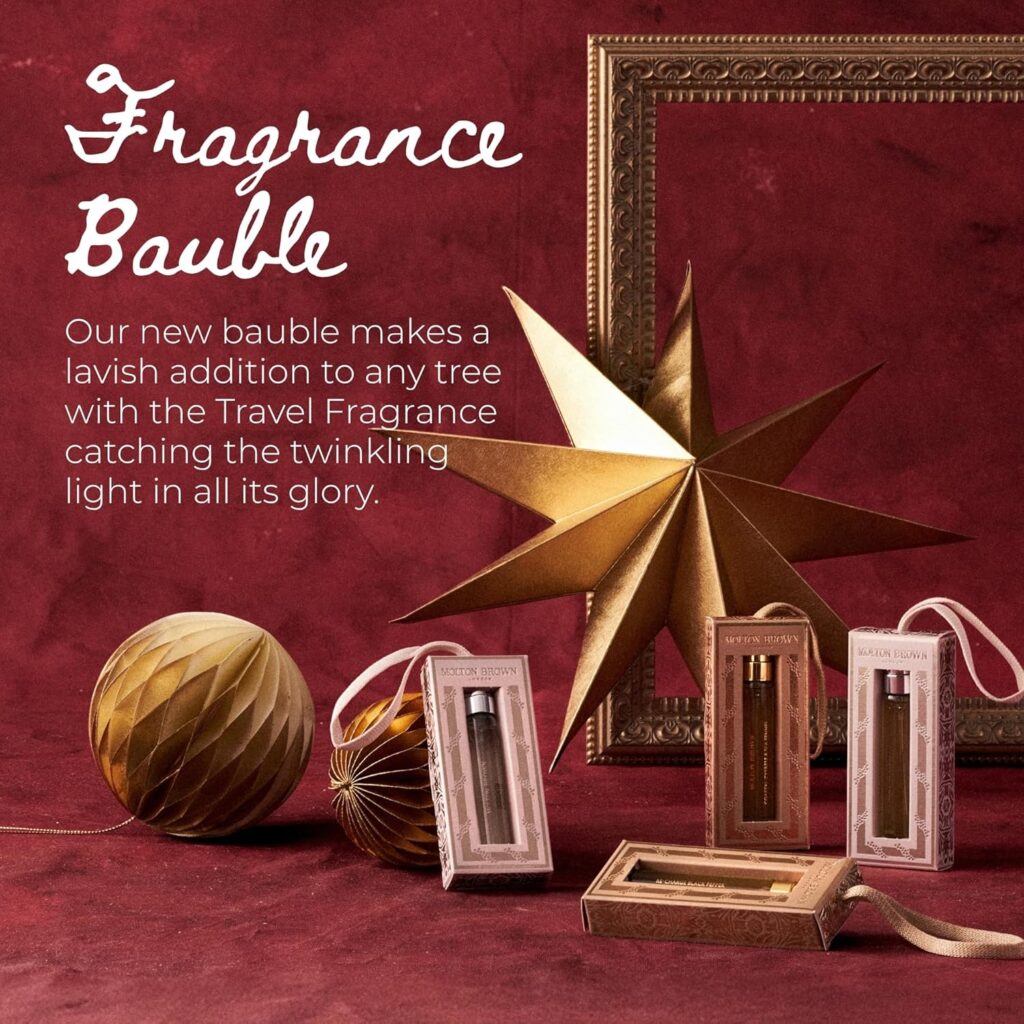
Her experiences as a consumer fuel her work as a professional. She adds, “A good example is the fragrance bauble we launched for Christmas 2025. We wanted to create a giftable format around a 7.5ml fragrance vial that would delight customers. Traditionally, our baubles came in rigid boxes, but this new version used a carton developed with one of our trusted UK suppliers.
“A lot of development work was undertaken to make the carton feel magical. The Christmas theme was based on opulence and gilded frames. We created a beautiful carton that framed the vial, included a paper hanging loop that felt incredibly soft, and incorporated a perforated regulatory panel that could be removed. Once removed, customers could hang the bauble on the tree, and the lights would shine through the vial.”
This added functionality gave customers the flexibility to enjoy the bauble as part of their festive celebrations before removing the perforated panel for straightforward recycling. “It was beautiful, but also simple to recycle,” Sarah highlights. “Once the vial was removed, the entirety of the secondary packaging could go into paper waste without needing to separate components. Customers want luxury, but they don’t want the hassle of sorting lots of materials afterwards.”
This illuminates another useful truth when looking at luxury packaging design. While sustainable packaging is highly desirable, that doesn’t mean the average consumer wants the simple act of recycling to feel like something they have to study for.
The invisible benefit
When sustainability continues to be a burning issue across every industry, the importance of this cannot be overstated. But simply pointing out that consumers like sustainability is not a particularly groundbreaking insight. Sarah approaches the subject with more nuance: Consumers care, but they still bought a luxury product for pleasure, emotion, and quality. The packaging has to do the responsible thing without making responsibility the entire experience, providing what Sarah refers to as an “invisible benefit”.
“I’d like to think consumers are becoming more aware. General awareness around packaging and waste is certainly much higher than it was ten years ago. At the same time, I don’t want customers to feel that a product has been designed solely to minimise environmental impact. I want sustainability to be an almost invisible benefit that doesn’t feel like a compromise. That’s difficult to achieve, but it’s important.
“I would challenge people to bridge the gap between aesthetics and environmental sustainability. There is a space where those two things can coexist, whether you’re operating in mass market or luxury.”
Evolving regulations add another challenge for packaging designers to overcome. Sarah is enthusiastic about rising to it. “If I’m honest, our hands have been forced to address some of these issues because of PPWR and EPR, and I’m delighted by that,” she says. “It removes the option of over-packaging. We can’t keep adding layers and materials without purpose. We have to be more honest.”
Finding the fun
That honesty is enabling innovation. “It’s making people think more creatively and work more intelligently,” says Sarah. “I think everyone needs to be prepared for the task ahead, because the retail climate and legislative changes are presenting us with a number of difficult challenges.”
“Retail is particularly challenging at the moment, and many brands are losing their physical presence. I value the fact that we still have bricks and mortar stores because they offer experiences that are difficult to replicate online. I hope that heritage and store experience continue to help us navigate those challenges.
“At the same time, we shouldn’t lose the fun. You still see brilliant examples of packaging on supermarket shelves – playful, clever, engaging packaging that creates excitement. That’s one of the things I love about the industry.”
Sarah’s role is to explore the science behind the art, combining both to create the unique magic of packaging. “Ultimately, my focus is on finding the point where design intent and technical reality meet.
“More than anything, I’d encourage people to create time for innovation. We can get trapped in a cycle of simply doing and delivering, without stopping to think. I challenge my team to take time out, go to the shops, look at what other people are doing, and think about opportunities.
“Sometimes that means completely rewriting the rules. If we have a Christmas product that we’ve packaged in essentially the same way for years, and sales have started to decline, the obvious response is to explore new rigid box formats. I don’t think that’s enough.
“It doesn’t have to be a rigid box. It doesn’t have to follow the conventions we’ve always used. We might be pigeonholing ourselves.”
“This is the key message I would like people to take away. Look outside the box – no pun intended!”
Luxury packaging doesn’t have to be more or less; it just has to be better. No detail is too small, and every idea is worth exploring.
At London Packaging Week 2026, thousands of those ideas will be gathered and shared under the same roof. Book a free ticket today to hear more of Sarah’s insights alongside those shared by thousands of professionals working across the packaging world.
Check out our socials
Lorem ipsum dolor sit amet, consectetur adipiscing elit Lorem ipsum dolor sit amet, consectetur adipiscing elit
The latest packaging projects
Is pEPR creating more packaging waste than it prevents?
Extended Producer Responsibility (pEPR) has moved from being a future regulatory requirement to an active business cost for UK food and drink producers. With invoices now being issued and further reporting deadlines approaching throughout 2026, packaging decisions are becoming increasingly important not only for sustainability but also for managing compliance costs.
London Packaging Week smashes attendance record with 16% growth in 2026
A record 6,688 unique visitors attended London Packaging Week 2026, as more than 230 exhibitors and over 110 speakers helped deliver the biggest edition in the event’s history.