
Every package has two lives
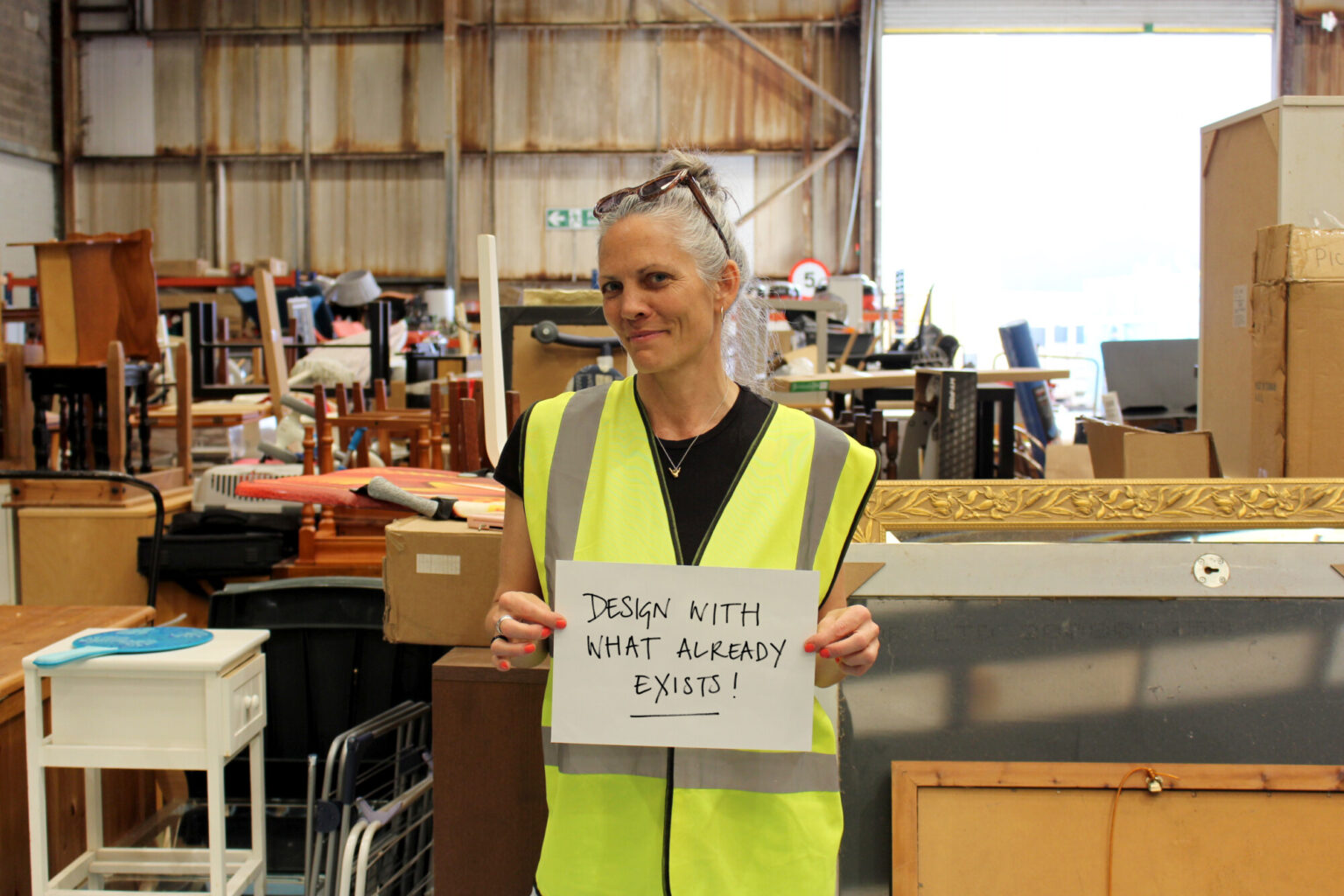
The packaging industry has become remarkably good at designing beginnings.
Every year, brands invest millions in understanding how consumers discover products, how packaging performs on shelf, how it protects what’s inside and how it reinforces the identity of the brand behind it. Every stage before purchase has become an exercise in relentless optimisation.
Yet every package has another life that begins the moment the consumer throws it away.
For Alexie Sommer, Co-Founder and Creative Director of URGE collective, that invisible second life is where some of the industry’s biggest opportunities remain. Speaking ahead of London Packaging Week 2026, where she will explore how design can accelerate the transition to a more circular economy, Sommer believes the packaging industry cannot truly embrace circularity until it understands what happens after the bin.
“The biggest thing I’d like people to leave thinking about,” she says, referring to delegates attending London Packaging Week, “is the sheer scale of the waste we’re producing every single day. Because we throw it away, it becomes invisible.
“Have you ever actually worked out how much waste you produce in a day, a week or a year? Can you picture what that volume looks like? Is it bigger than your house? Bigger than your office? Bigger than a football pitch?
“Once you begin to visualise it, your perspective changes.”
That observation is about far more than waste. It is really about visibility, or more accurately, the lack of it.
The modern waste system is extraordinarily effective at removing packaging from our sight. Consumers place something in a recycling bin, and it disappears. Businesses hand products over to logistics providers and rarely witness what happens beyond collection. Even many designers, whose decisions ultimately determine whether a package can be recovered, sorted or recycled, spend surprisingly little time observing the infrastructure their work eventually enters.
For Sommer, that disconnect lies at the heart of why circularity remains so difficult to achieve.
Not because the industry lacks ambition.
Not because designers lack creativity.
But because too few people truly understand the system they are designing for.
“For me, the biggest barrier is knowledge,” she says. “Knowledge on the client side, knowledge among designers and knowledge among packaging manufacturers about the best ways of doing things.”
The comment may seem surprising after more than a decade of industry discussion around the circular economy, yet Sommer believes understanding has often remained theoretical rather than practical.
“We’ve been talking about the circular economy for years,” she explains. “Designers understand the theory better, but putting it into practice is difficult.”
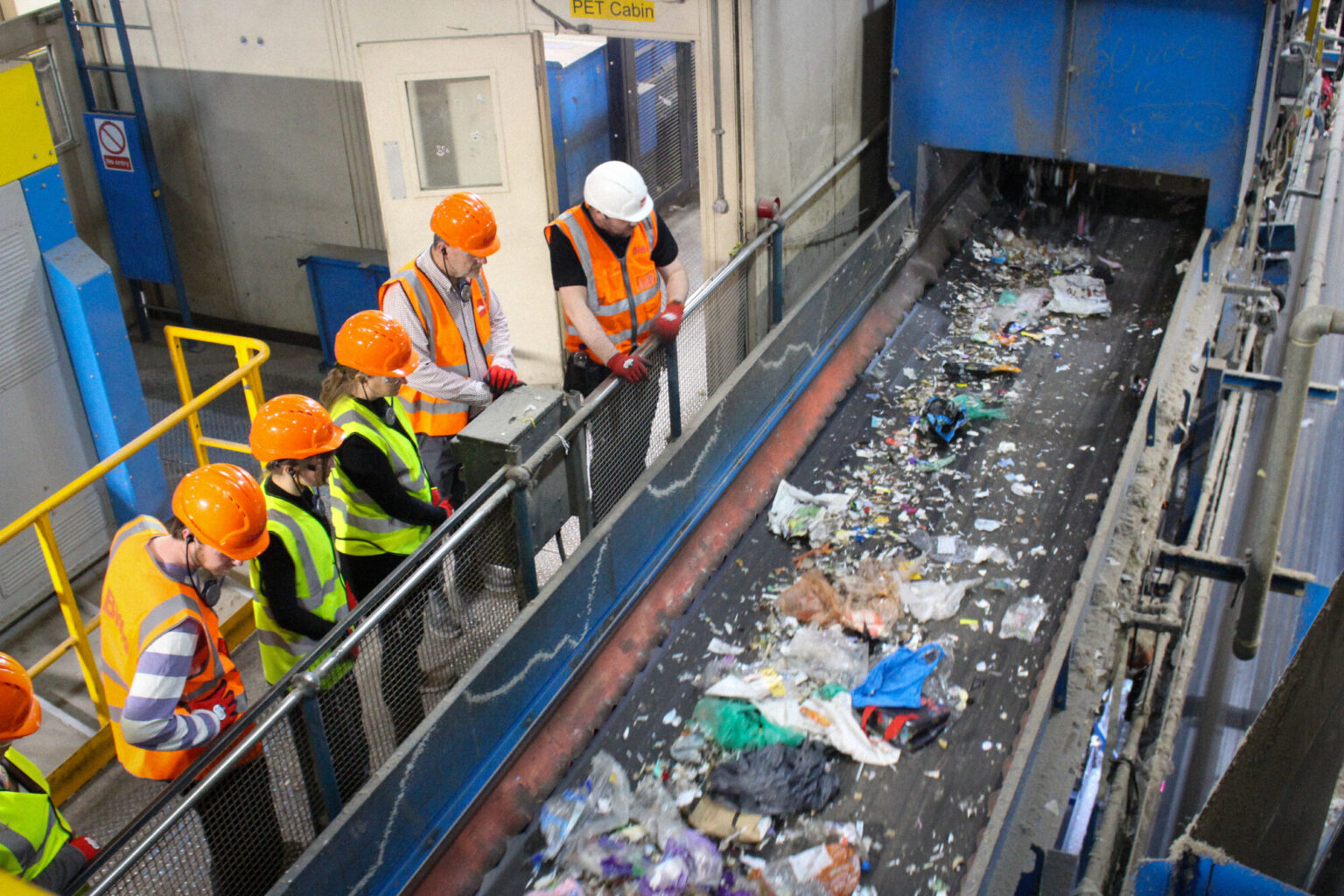
That belief inspired Design Skills for Embedding Circularity, a programme that takes designers inside recycling facilities, paper mills and waste processing centres to experience first-hand how packaging is collected, sorted and recovered. Funded by the Chartered Institute of Wastes Management (CIWM) and working alongside the Design Council, The Circular Economy Institute and WRAP – design participants have been introduced to experts across the supply chain and encouraged to understand circularity not as an aspiration but as an operational reality.
“One example from the programme came when we visited Sherbourne Recycling,” Sommer recalls. “We learned that anything smaller than 50 millimetres falls through the holes in one of the main sorting machines, the trommel, and doesn’t get recycled.
“Take a toothbrush. Depending on how it lands, it may simply fall straight through and never be recovered.
“Those are exactly the kinds of practical insights designers need.”
For Sommer, the more surprising revelation is that many designers never encounter these realities during their education.
“They’re not taught this at university,” she says. “None of my education covered end-of-life. It wasn’t a module. It wasn’t part of the brief. Nobody ever asked, ‘What happens to this once it’s reached the end of its life?’
“Whether it was a book, a poster or a leaflet, that question simply wasn’t part of design education.”
That omission matters because it shapes the questions designers ask from the outset. If end-of-life is absent from the brief, from education, and from the conversations surrounding a project, it inevitably becomes absent from the solution. Circularity is then expected to emerge later through improved materials, better recycling infrastructure or new regulation, when in reality many of its most important decisions have already been made.
It is, she believes, one of the most important shifts the industry can make.
Designing for systems, not just products.
If there is one idea that runs through everything Sommer discusses, it is that packaging cannot be considered in isolation.
Every package sits within a much larger system of materials, manufacturing, logistics, regulation, recovery and consumer behaviour. Optimising one part of that system while ignoring the rest rarely delivers the outcome designers hope for.
It is why she repeatedly returns to a phrase that quietly reframes the designer’s role.
“We’re really material stewards and guardians,” she says. “We should value materials and treat them as assets.”
Thinking about materials rather than packaging changes the conversation entirely. If materials are assets, success is no longer measured solely by how well a package performs on shelf, but by how effectively those materials continue to create value afterwards.
Viewed through that lens, circularity becomes something much broader than recycling.
It becomes a question of stewardship.
“If only we could move towards something much more utilitarian in the way products are presented,” she says. “Perhaps branding only needs to be a simple circular or square label on a standardised pack. That’s when we’d truly be designing as part of a system.
“Everyone could use similar forms, shapes and materials, making it much easier to reclaim and extend the life of those materials.”
Whether or not the industry ever embraces that level of standardisation is almost beside the point. What Sommer is really challenging is the assumption that every packaging problem should be solved independently. The future, she suggests, may depend less on creating ever more individual packaging solutions and more on designing systems that enable materials to circulate more effectively.
Circularity also changes how innovation is measured. Rather than focusing solely on new materials, Sommer believes innovation increasingly depends on improving the conversations that happen before materials are ever selected.
That is why collaboration features so prominently throughout her work.
“There simply aren’t enough conversations happening across disciplines,” she says.
The comment reflects a frustration shared across much of the packaging industry. Designers, manufacturers, material scientists, recyclers and brands all possess highly specialised knowledge, yet those perspectives are often brought together too late in the development process.
Sommer describes a scenario familiar to many agencies.
A client commissions a project. Designers explore ambitious concepts and develop a solution everyone is excited about. Only after the direction has been approved does it reach the manufacturer, who explains that the concept cannot be produced as originally intended.
“The better approach is to speak to the producer or manufacturer first and ask, ‘Can I make this? Can I make it this way? What are my options?’
“That means the client, designer and manufacturer all need to be part of the conversation from the very beginning.”
Sommer’s experience has also reinforced that no single discipline holds all the answers. Designers understand brands, manufacturers understand production, recyclers understand recovery and material specialists understand performance, but few people see the entire lifecycle. Bringing those perspectives together earlier creates better decisions long before a package reaches production. As regulation evolves, those conversations are becoming easier because sustainability is no longer simply an environmental aspiration, but an increasingly commercial one.
“Designers can now say, ‘If we design it this way, your EPR fee will be higher, but if we design it differently, it’ll be lower.’
“That creates a much more interesting conversation and gives designers greater agency.”
Sommer is careful not to present sustainability and profitability as opposing forces.
“There’s no point looking only at carbon emissions or circularity,” she says. “You have to consider economics, circularity and environmental impact together. Ultimately, everything has to be economically viable.”
The same principle applies to creativity.
“I don’t think better sustainability means the end of creativity,” she says. “You can still be incredibly creative with very simple materials.
“There are amazing examples of what people are achieving with basic cardboard, with structural design, with 3D printing and with emerging materials.”
She points to innovators such as Shellworks, whose naturally derived material behaves like conventional plastic while breaking down without creating microplastics, as evidence that the next generation of packaging innovation is already emerging. The challenge, she argues, is rarely one of technical possibility.
“The biggest barriers aren’t technical,” she says. “They’re regulatory.”
If the packaging industry is to become genuinely circular, making that invisible second life visible again may be its most important design challenge. Every package has two lives. The industry has spent decades perfecting the first. Its greatest opportunity now lies in designing for the second.
Alexie Sommer will explore these ideas in greater depth at London Packaging Week 2026 as part of a conference programme featuring more than 90 expert speakers examining the future of packaging design, materials, sustainability and innovation. Register now to secure your place.
Check out our socials
The latest packaging projects
Is pEPR creating more packaging waste than it prevents?
Extended Producer Responsibility (pEPR) has moved from being a future regulatory requirement to an active business cost for UK food and drink producers. With invoices now being issued and further reporting deadlines approaching throughout 2026, packaging decisions are becoming increasingly important not only for sustainability but also for managing compliance costs.
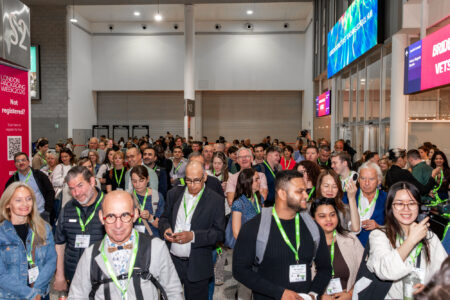
London Packaging Week smashes attendance record with 16% growth in 2026
A record 6,688 unique visitors attended London Packaging Week 2026, as more than 230 exhibitors and over 110 speakers helped deliver the biggest edition in the event’s history.