
The return of the grown-up soft drink
There is a strange contradiction in modern drinking culture. We have become more sophisticated than ever in almost every category that touches the table. Coffee now arrives with tasting notes and provenance. Tea has moved from breakfast staple to ceremony. Even olive oil has acquired the language of terroir and origin. Yet, for all their innovation, soft drinks often feel caught between two extremes. They are either aggressively functional or unapologetically nostalgic.
On one side sit fluorescent promises of energy, focus and optimisation. On the other are familiar household names, carrying decades of memory and habit. Between the two lies a quieter gap: drinks designed not simply to hydrate or stimulate, but to shape atmosphere.
For Toby Gorn, that gap was difficult to ignore.
He does not describe his route through the drinks industry as carefully curated. It began, as he puts it, on the shop floor.
“I started working in Oddbins 20-odd years ago,” he says. “Selling wine, stocking shelves, telling people why to buy the £6 bottle instead of the £5 one.”
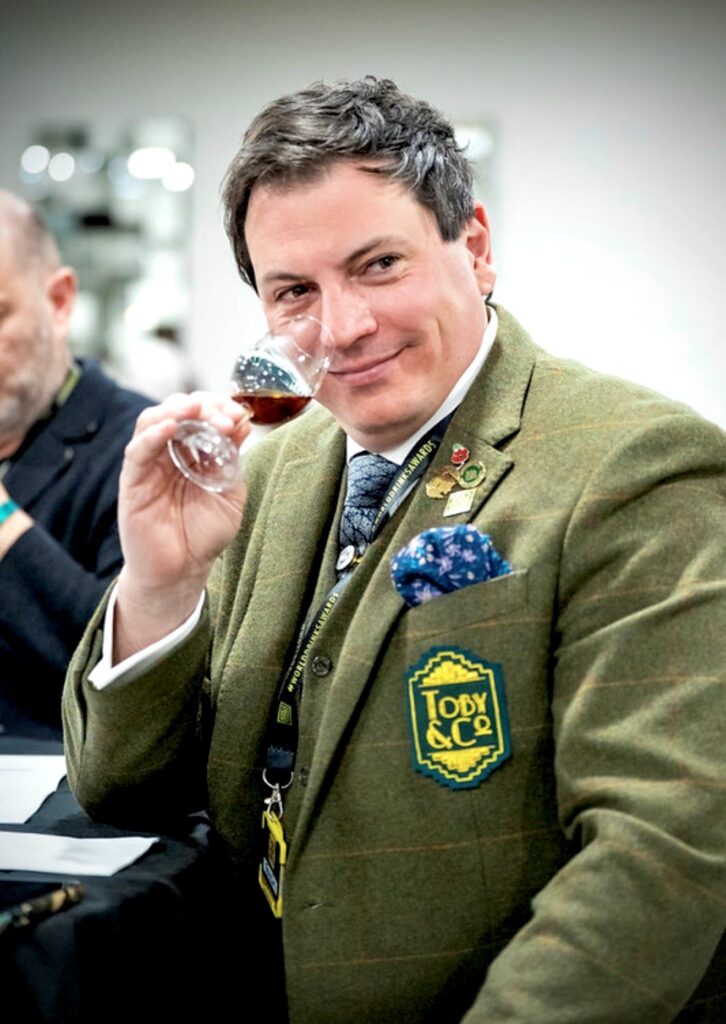
It was an early education in persuasion, but also in something more subtle: how people choose to elevate ordinary moments. From there came Michelin-star hospitality in Mayfair, early responsibility for drinks programmes, and a career that has since moved through whisky retail, spirits consultancy and international judging panels.
“I’ve done almost everything in the drinks industry,” he says.
The breadth is unusual. So is the way he talks about it. Gorn is formally a drinks judge, consultant and editor, but slips easily between roles without leaning too heavily on any of them. He calls himself an all-rounder. “Jack of all trades, master of none,” he adds, half in jest.
Yet the accumulation of experience has given him a particular vantage point. He has spent years evaluating drinks not just for flavour, but for coherence – how liquid, packaging and context align.
And increasingly, it is the context that interests him most.
Mention flavour, and he talks about travel. Mention packaging, and he talks about memory. Mention competitors, and there are references to Aston Martins, railway posters and poolside hotels in the Mediterranean.
He returns repeatedly to one word.
Journey.
“I think the main magic is giving people that extra value beyond the packaging and branding,” he says. “It takes you on a journey.”
It is a simple idea, but one that feels oddly absent from much of the soft drinks category. Walk into an independent drinks shop, and the effect is immediate: shelves crowded with cans competing for attention through colour, typography and volume of message. Gorn describes it without hesitation.
“Almost like a visual panic attack.”
It is not an uncommon critique. Many categories have moved steadily towards louder expression, where differentiation is achieved through intensity rather than restraint.
Toby&Co, his own drinks company, moves in the opposite direction.
“If everyone turns up with Ferraris and Lamborghinis,” Gorn says, “and someone turns up with an old Aston Martin DB5, you’re still going to look at the Aston.”
The analogy is not nostalgic so much as behavioural. It speaks to attention not as something demanded, but something held.
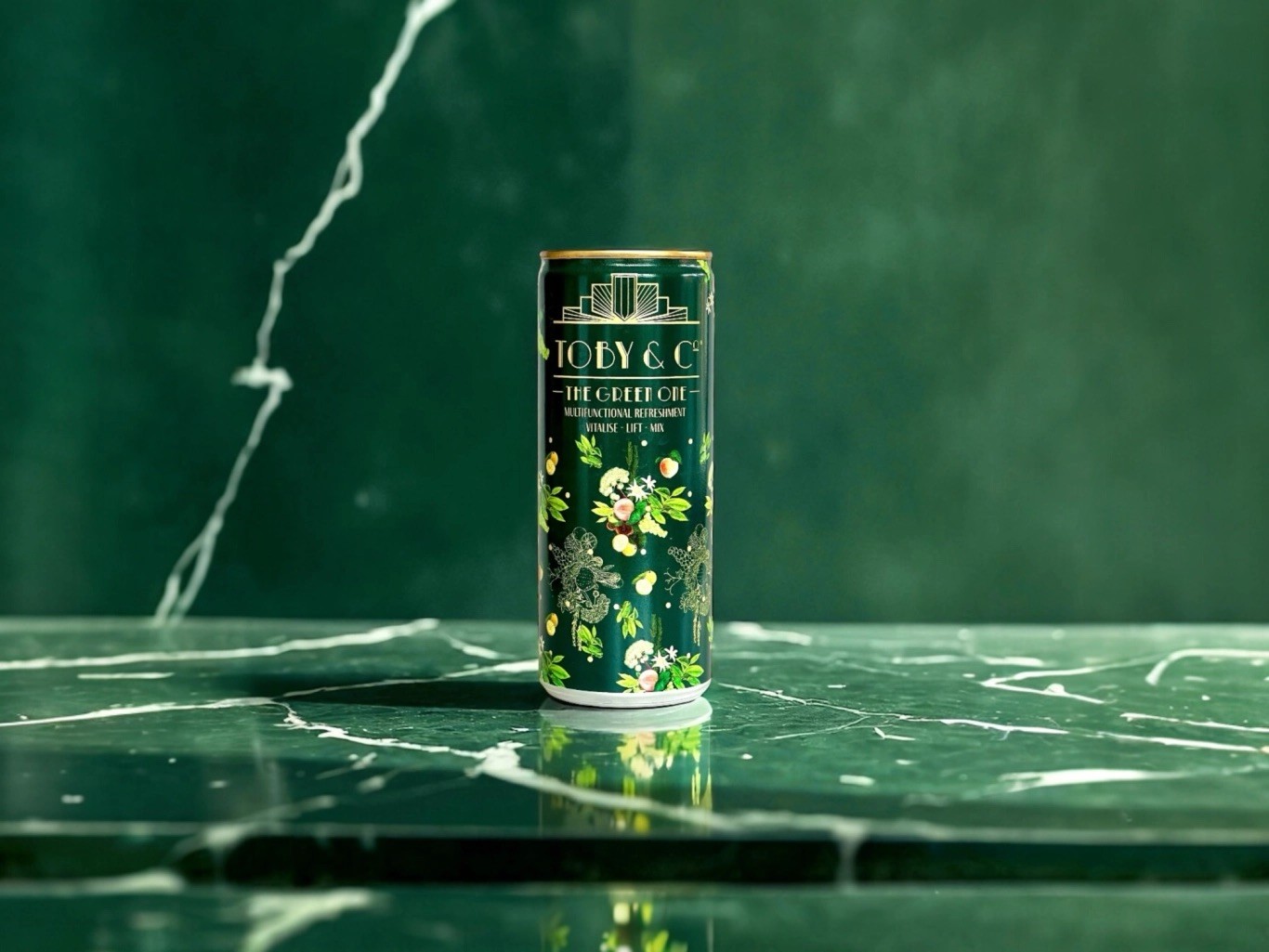
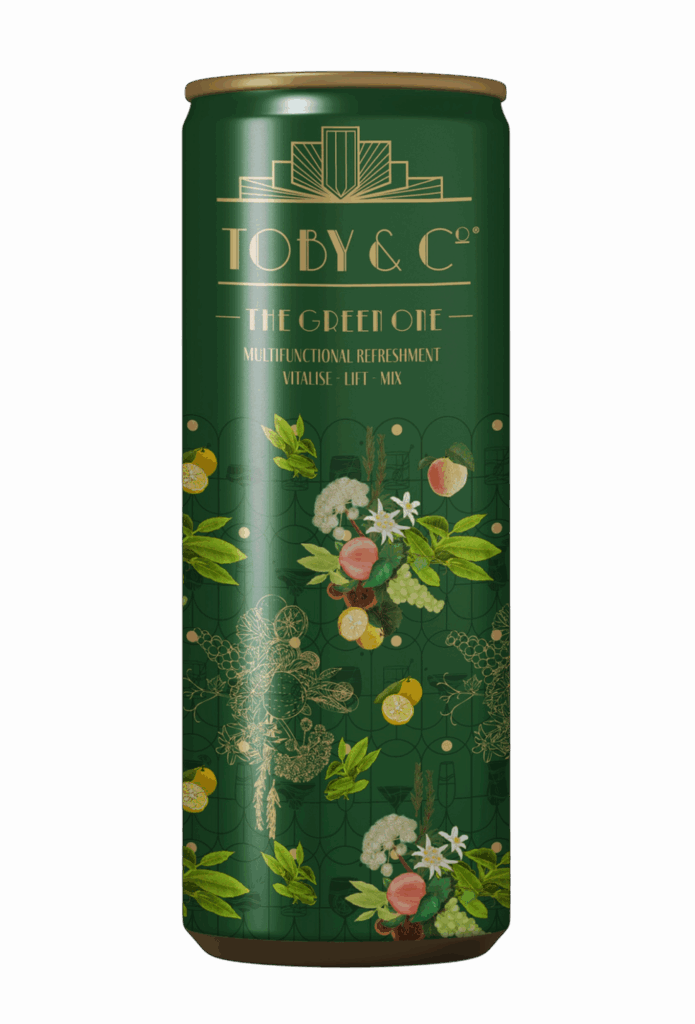
The result is a botanical soft drink called The Green One, built around English country garden herbs, Alpine botanicals and Mediterranean citrus notes. It is designed less as a functional beverage than as a shift in tone.
While the liquid contains green tea extract, L-theanine, nootropic mushrooms, magnesium and potassium, Gorn is wary of presenting it as a list of effects.
“You never want it to feel like you’re drinking a supplement,” he says. “It’s crafted to taste as elegant as it feels good.”
Instead, the emphasis sits elsewhere: on ritual, on moment, on placement. The drink can be taken neat, poured over ice, or used as a mixer, depending on the context rather than the instructions.
Gorn is explicit about avoiding what he calls a “nanny-state approach” to wellness branding.
“I don’t like people saying, ‘ don’t drink alcohol and then you must drink this instead.”
The proposition, instead, is looser. A drink that sits alongside different occasions without trying to define them.
Those occasions, in Gorn’s telling, are rarely abstract. They are places.
Burgh Island. The Queen Mary. Highclere Castle. The Scottish Highlands. The Mediterranean coast.
Not as marketing devices, but as shorthand for atmosphere.
“I just wrote a big article about whisky,” he says, “and how Scotch became boring because of design trends. It’s not taking you to the Highlands anymore. It’s just modern art on a shelf.”
It is a pointed observation, but also a revealing one. At its core is a concern that drinks are losing their ability to evoke anything beyond themselves.
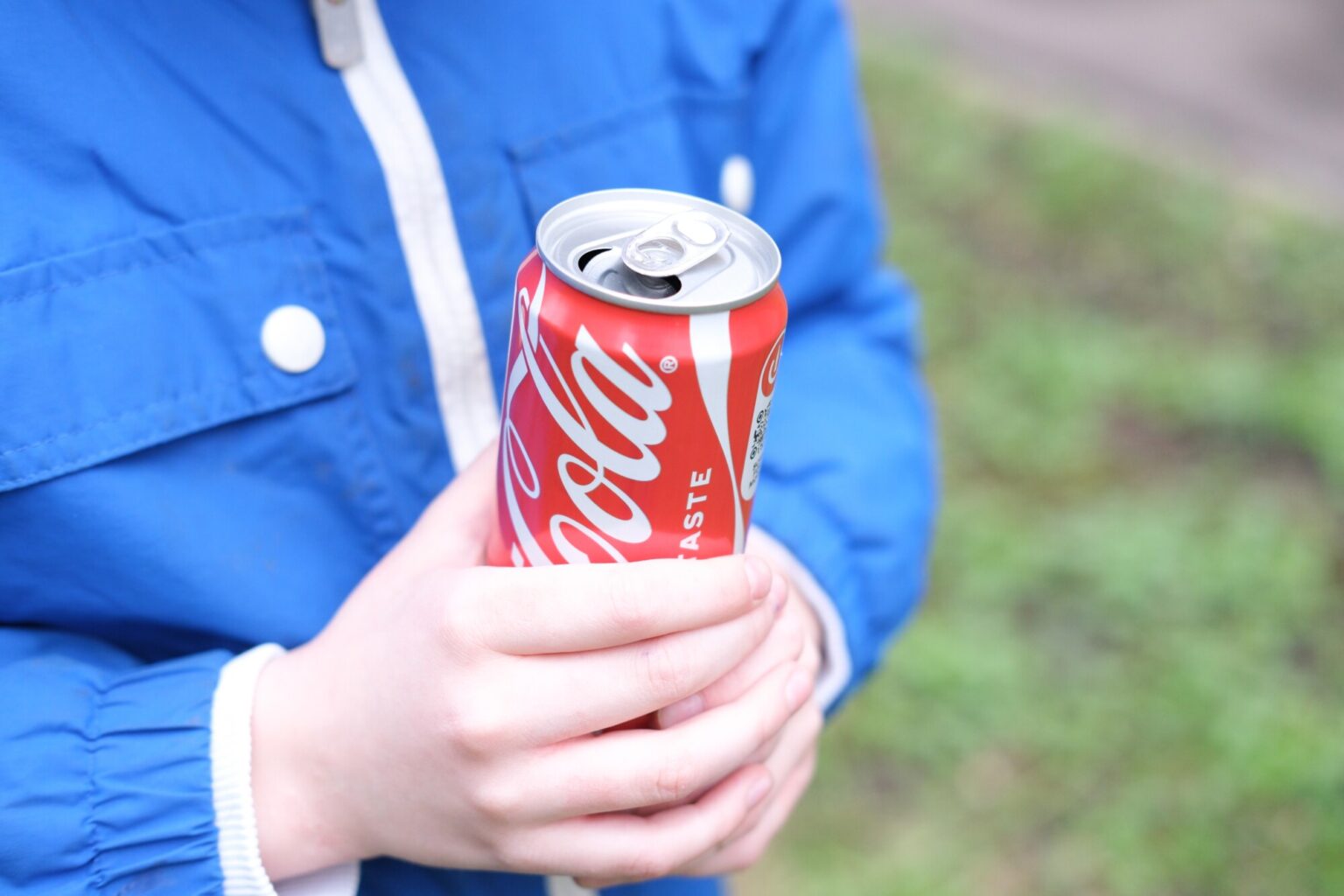
Coca-Cola, he suggests, still understands this instinctively. “That’s why Coke is good,” he says. “It takes you back to childhood.”
Memory becomes a kind of flavouring.
That same question of how memory, material and meaning are carried forward is not confined to drinks alone. It sits within a wider design conversation about how products are built to evoke, not just perform.
At London Packaging Week, this tension becomes visible. A meeting point for the hidden decisions that shape how products are perceived long before they are tasted, poured, or opened. It is where brands, designers and suppliers come together to explore what sits beneath the label – materials, structure, regulation, sensory design, and the cultural cues that turn a product into an experience.
In many ways, it is the same problem seen from a different angle: how to design for feeling as much as function.
That idea runs directly through Toby&Co’s approach to packaging: matte green finishes, gold detailing, Art Deco-inspired illustrations. Designed to be felt as much as read.
That physicality is central to how Gorn thinks about drinking itself. “People drink with their eyes, but also with their hands,” he says. “A can isn’t just something you grab and throw away.”
“Drink it however you like,” he adds. “From the can, in a crystal glass, mixed with gin. We don’t tell people how to enjoy it.”
It is this openness to context that naturally leads to where he imagines the brand sitting: not in scale-driven retail environments, but in places where atmosphere still carries weight – Michelin-star dining rooms, heritage hotels, long-distance trains.
“I’d love to see it in places like the Orient Express or the British Pullman,” he says.
In that sense, it is less about expansion than belonging.
At its centre, Toby&Co is not really about replacing existing drinks. It sits instead in a narrower space: an attempt to reintroduce a sense of elegance into a category that, in many ways, has become louder.
Not through performance or exaggeration, but through tone.
A drink designed with the assumption that atmosphere still matters, whether on a train carriage moving through Europe, in a hotel overlooking water, or poured quietly at home at the end of the day.
“People don’t just want something to drink,” Gorn says. “They want something that takes them somewhere else.”
Check out our socials
Lorem ipsum dolor sit amet, consectetur adipiscing elit Lorem ipsum dolor sit amet, consectetur adipiscing elit
The latest packaging projects
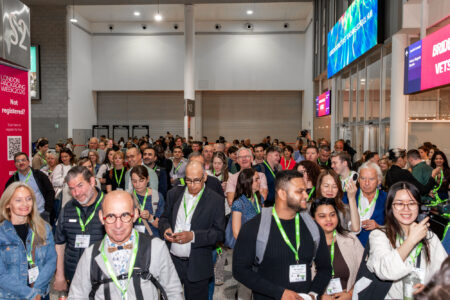
London Packaging Week smashes attendance record with 16% growth in 2026
A record 6,688 unique visitors attended London Packaging Week 2026, as more than 230 exhibitors and over 110 speakers helped deliver the biggest edition in the event’s history.
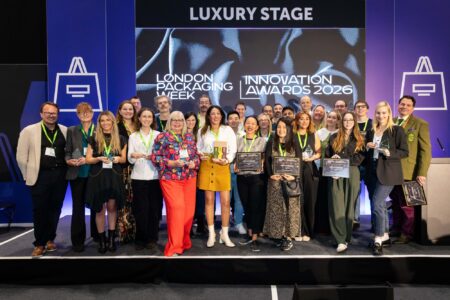
Prada, Jack Daniel’s, Heinz and Hotel Chocolat among London Packaging Week Innovation Awards winners
From Formula 1-inspired luxury engineering and interactive launch packs to everyday usability and recyclable flexible packaging, the 2026 London Packaging Week Innovation Awards reveal how brands are turning packaging into a source of practical, commercial and consumer value.