
Inside the emotional engineering of spirits innovation

In spirits, innovation rarely comes in the form of disruption. It’s more often a balance between what a brand can evolve into and what it must always remain.
Within William Grant & Sons, that negotiation unfolds across some of the most recognisable names in global spirits—Glenfiddich, shaped by patience and provenance. Hendrick’s is defined by imagination but disciplined by structure. Between them sits an innovation function that is less concerned with novelty than with deciding which ideas deserve to survive contact with reality.
Simon Elmer, Global Head of Innovation Practice, operates inside that tension across innovation delivery, commercial performance and organisational change. In practice, the role is less about generating ideas than filtering them.
That distinction is critical. In a category where heritage is infrastructure, innovation begins not with creation, but with selection.
It is also a perspective Elmer brings to his role as a judge for the London Packaging Week Innovation Awards, where ideas are assessed on how successfully they resolve competing pressures around brand, consumer expectations, functionality, and commercial viability.
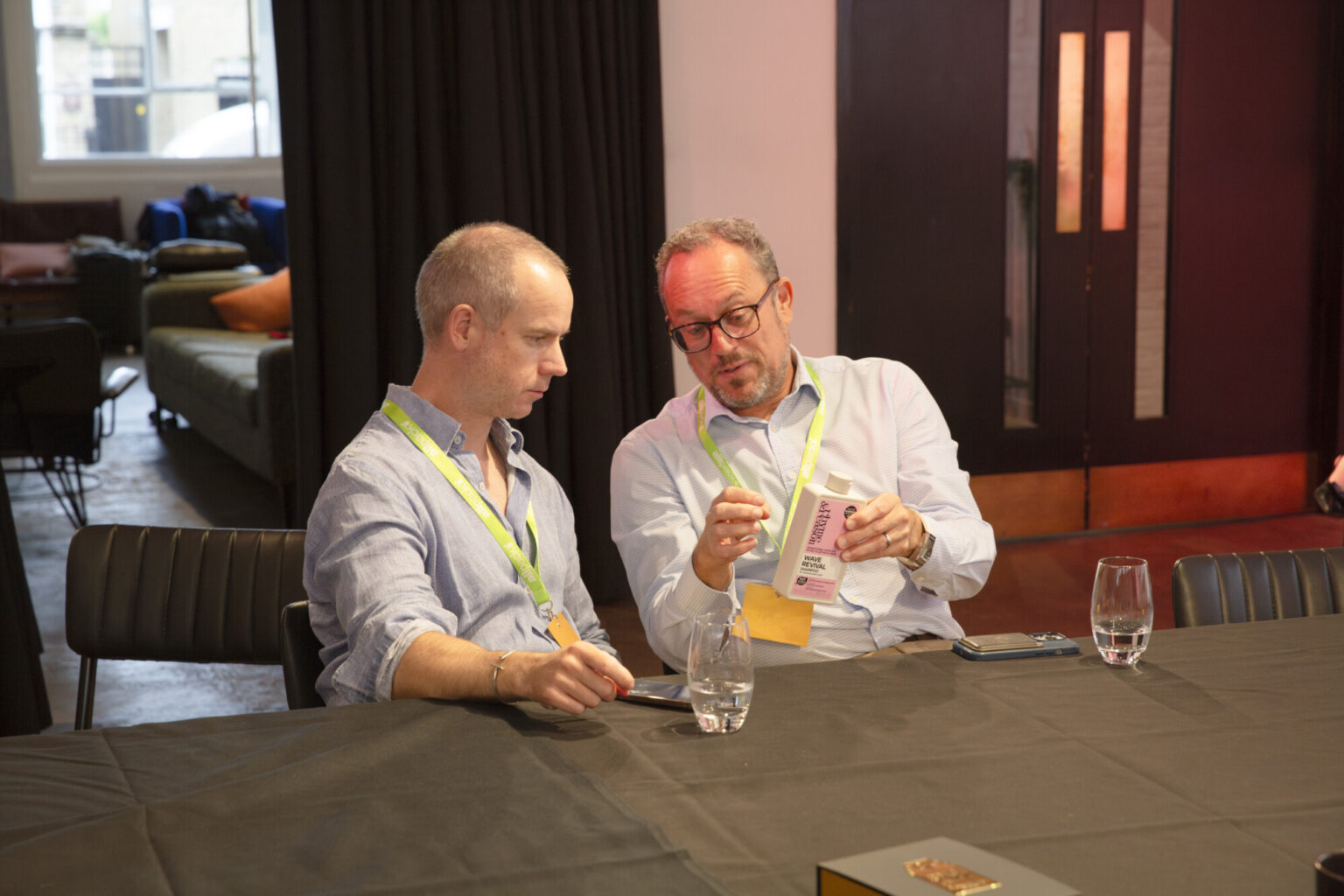
“It should be fun”
“Good question,” Elmer says when asked about the emotional nature of spirits. “Spirits is an emotional-based pursuit. All companies identify certain consumer groups, and spirits should be fun. When you drink something, it should be fun.”
It is a simple framing, but it anchors a far more complex system.
“The way the brand world is built is important to the consumer,” he continues. “They want to be part of that brand world.”
The brand world Elmer is referring to is a tangible thing built through objects, rituals and recognition through the repeated interaction between product and moment. Within that world, packaging provides a point of entry for consumers. “Hendrick’s is a great example,” he says. “It has a brand world that is very distinct.”
“The packaging needs to play a part in that brand world, absolutely no doubt. It needs to give off the right emotion for the consumer engaging in that occasion, whatever they want from it: impressing people, discovering things, relaxing.”
“In many ways,” he adds, “the pack is the best piece of advertising for spirits.”
That logic extends beyond spirits into adjacent premium categories, where physical objects increasingly carry emotional weight once held by media or advertising.
“On the luxury side, you are seeing very eloquent packs evolving,” he notes. “They can be very expensive, but people do buy them. That also has to amplify the brand and what it represents.”
Designing for occasion
If packaging is a form of language, for Elmer, occasion is intrinsically tied to structure – something brands have a direct connection to.
A relaxed moment demands ease. A ritual demands theatre. The difference is behavioural rather than aesthetic.
“There is no point having a relaxed occasion where the packaging is difficult to access,” he says. “For a relaxed occasion, you want it to be really simple. But for something more ritual-based, you are seeing higher-end packs that include balances or special cups and glasses.”
Even operational detail becomes design input.
“With Monkey Shoulder,” he says, “we make sure we talk to the bartenders to ensure it is easy for them to handle.”
“They are advocates for the brand,” he adds. “And if it is difficult to use, they are not going to pick it up.”
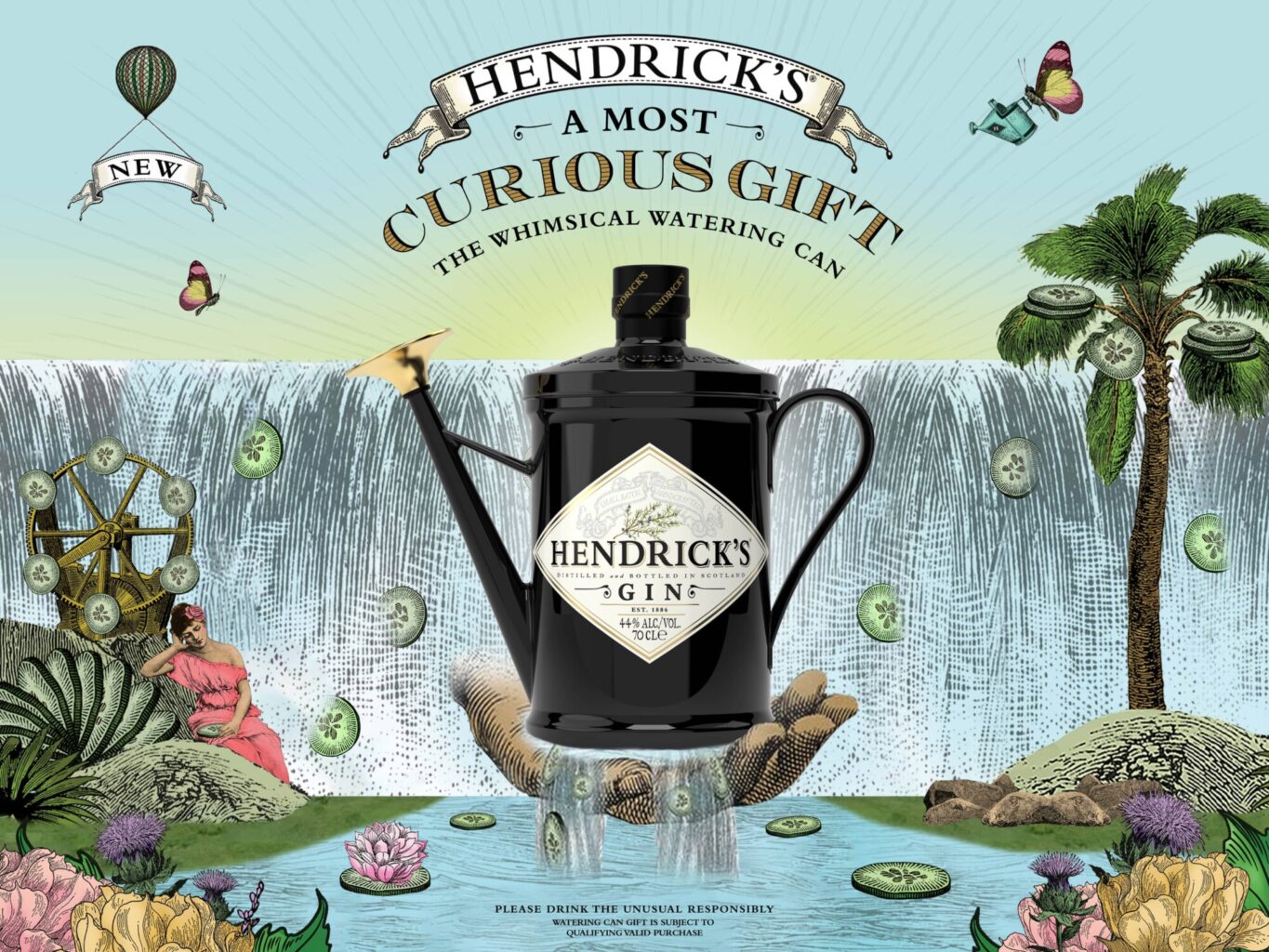
A stable visual language, under pressure
Within whisky, the visual language is stable but not static. Differentiation exists within a narrow cultural frame, and pack designs must be carefully tailored to fit in with the brand world. Some structural codes are already fixed. But increasingly, differentiation sits in nuance rather than form.
“There are distinctive ones like Glenfiddich,” says Elmer. “That triangular bottle becomes very unique to those brands. However, the graphical approach to labels is changing significantly. Some are trying to pick up that old-fashioned heritage vibe, others are going more modern.”
Neither direction is without risk.
“You have to be careful,” he adds. “You cannot go too far in one direction, or you lose heritage, which is important, while still needing to stay modern and relevant.”
That tension defines the category more than any single innovation ever could.
From technical innovation to emotional intelligence
The language of innovation itself has shifted. Today, innovation is far more emotional than technical.
“It used to be enough to launch an age statement or a cask finish,” Elmer reflects. “But now most companies are trying to get closer to consumer insight. What is the emotional benefit, what is the tension point, and how do you create benefit from that? That is the game now.”
Products are no longer judged solely on difference, but also on timing, relevance and feeling.
“People invest in the category because they want that emotion,” he continues. “They want to create an impression before dinner, relax with friends, impress people.”
And as that shift takes hold, it begins to redefine what innovation actually means inside the category.
What remains
In spirits, innovation rarely arrives in the form of a sudden, system-wide change. More often, it moves quietly between industries, disciplines and constraints, guided as much by what is removed as what is created.
The tension between heritage, emotion, functionality and commercial reality has become the category’s defining condition. The question is no longer simply what to design next, but how to design something that is culturally coherent, commercially viable and emotionally resonant at the same time.
That question sits at the heart of the wider packaging industry, where the same pressures are now converging across luxury, beauty, drinks and FMCG. And in that space between what is possible and what is allowed to survive, the category quietly defines its future.
London Packaging Week
Those questions will sit at the centre of discussions at London Packaging Week, where brands, designers, suppliers and innovators will come together to explore the future of luxury, beauty, drinks and FMCG packaging, alongside the London Packaging Week Innovation Awards, judged by leading figures from across the industry, including Simon Elmer.
Taking place at Excel London on 16 & 17 September, the event will bring together more than 210 exhibitors, over 90 speakers and thousands of packaging innovations from across the global market.
Register to attend and discover the ideas, materials and partnerships shaping the next phase of packaging innovation.
Check out our socials
Lorem ipsum dolor sit amet, consectetur adipiscing elit Lorem ipsum dolor sit amet, consectetur adipiscing elit
The latest packaging projects
London Packaging Week smashes attendance record with 16% growth in 2026
A record 6,688 unique visitors attended London Packaging Week 2026, as more than 230 exhibitors and over 110 speakers helped deliver the biggest edition in the event’s history.
Prada, Jack Daniel’s, Heinz and Hotel Chocolat among London Packaging Week Innovation Awards winners
From Formula 1-inspired luxury engineering and interactive launch packs to everyday usability and recyclable flexible packaging, the 2026 London Packaging Week Innovation Awards reveal how brands are turning packaging into a source of practical, commercial and consumer value.