
Mr Bingo unboxed: Profanity, play, and the power of not giving a F***
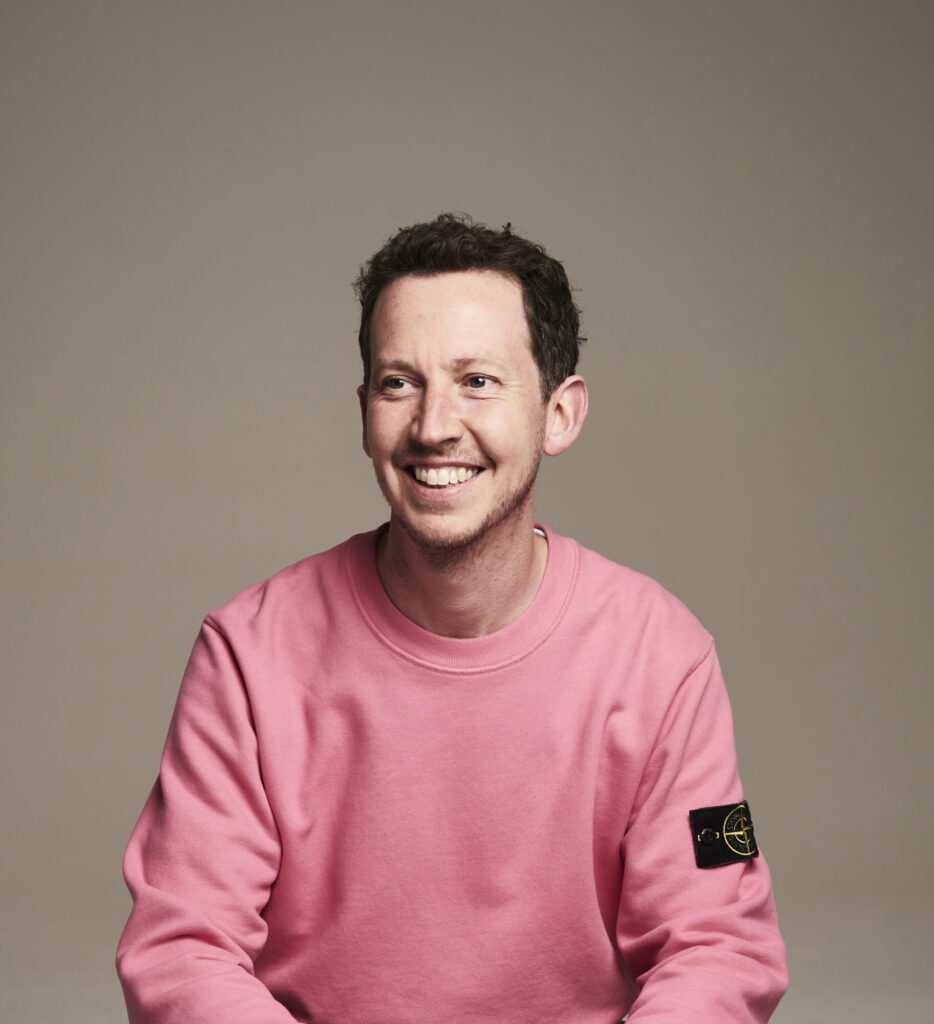
Meet Mr Bingo: the illustrator who said “f*** you” to the commercial grind and turned trolling into an art form. For 14 years, his sharp lines and sharper wit graced the pages of The New Yorker, The Guardian, and even The New York Times. Then, in 2015, he launched a Kickstarter that featured a rap video, washing-up services, and offers to insult you on Christmas Day, because why not?
Since quitting client work, he’s been busy making mischief and art in equal measure. In 2023, he dropped everything, grabbed a rucksack at 8:40 pm on New Year’s Eve, and vanished for a year, only to resurface with stories from Sri Lanka, Japan, Cornwall, and probably somewhere you wouldn’t dare go. Now, you’ll find him behind the counter at his London shop on Amwell Street, where every Friday is a front-row seat to his beautifully chaotic world.
If you think that’s wild, wait till you hear him unpack it all live. At London Packaging Week on Wednesday 15 October, Mr Bingo takes the stage with “Unboxing Mr Bingo: How I Got Here and What I’ve Learnt”, a half-hour rollercoaster through offensive postcards, art chaos, rap attempts, and the bizarre mishaps that landed him accidentally recruiting nudes and moonlighting as a dominatrix. Expect tales of high treason, pandemic creativity, death threats, and plenty of hard-earned wisdom. Grab a drink and buckle up, this isn’t your average artist’s talk.
“Everyone takes life way too seriously,” he tells London Packaging Week. “It’s boring. I’ve made a job out of playing and having fun every day, and I can’t believe I get paid for it. It’s too good to be true. I want people to do the same, to live fuller lives.”
That honesty, raw and unfiltered, is what sets Bingo apart. Unlike most artists who hide behind galleries or cryptic concepts, he’s online daily, chatting with thousands of fans, co-creating projects with strangers around the world. “I don’t hide,” he explains. “People trust me because I’m authentic. I discuss money, how I make things, and everything is on the table. No bullshit.”
His openness extends to his creative process. Rather than fitting neatly into the polished world of commercial illustration or fine art, Bingo’s work thrives in the messy overlap of comedy, drawing, and raw human connection. “I basically just talk about myself,” he admits. “I don’t bother with data, or history, or big world events. I share my own journey, what I’ve learned from my 20 years of making stuff, and the weird things I’ve experienced.”
The power and playfulness of social media
Social media plays a starring role in that journey. Bingo was lucky to grow up alongside the early social platforms like Myspace and Facebook, and then ride the waves of Twitter and Instagram. He’s turned these channels into genuine communities, spaces where audiences aren’t just passive consumers but active collaborators. “Most artists keep their work secret until it’s done. I share everything. It’s a conversation, not a monologue.”
It’s not just about exposure or marketing. For Bingo, it’s about breaking down barriers. “I’m constantly online and in touch with my fanbase, which is a lot of people around the world. We make things together. I come up with ideas, strangers chip in, conversations turn into new projects, and it evolves. That’s how I make a living.”
This approach is a radical departure from the traditional art world’s ivory tower mentality. Many artists isolate themselves, unveiling finished work in distant galleries. Bingo does the opposite: “Everything’s out in the open. People know how I work, how I think, and how I make money.”
Authenticity in an age of pretenders
His blunt honesty extends beyond art to a critique of business culture. Bingo isn’t impressed with companies pretending to be something they’re not. “Most companies are just trying to make money, but they try to act better than they are. People see through that. The audience is smarter than you think.”
He calls out “greenwashing” and “whitewashing” (though admits he’s still figuring out the latter) as examples of insincere corporate posturing. For Bingo, real connection demands transparency and humility. “If you want to be authentic, you have to be honest about what you are and what you’re doing.”
His own business model reflects that ethos. He sells nothing through big retailers – his shop on Amwell Street and his website are the only places to buy his work. “That means there are no rules. Tesco isn’t going to stock a product called “Sad As F***”, but that makes it special. It’s the only place in the world you can get it.”
The balance between independence and collaboration
Bingo’s fiercely independent nature means he rarely collaborates with companies on projects, sticking to his own ideas and style. But ironically, he embraces collaboration on a massive scale through his audience. Thousands of strangers shape his projects by sharing ideas, feedback, and even nudity (yes, he accidentally recruited nudes for his art). “I love collaborating with the crowd. It’s sharing, getting input from more minds than just my own.”
This paradox, being both independent and collective, is a defining feature of Bingo’s career. He doesn’t follow trends or compete with others; instead, he trusts his voice and the unique space he’s carved out. “As long as people keep liking what I do, I hope to do this for the rest of my life.”
Laughing in the face of crisis
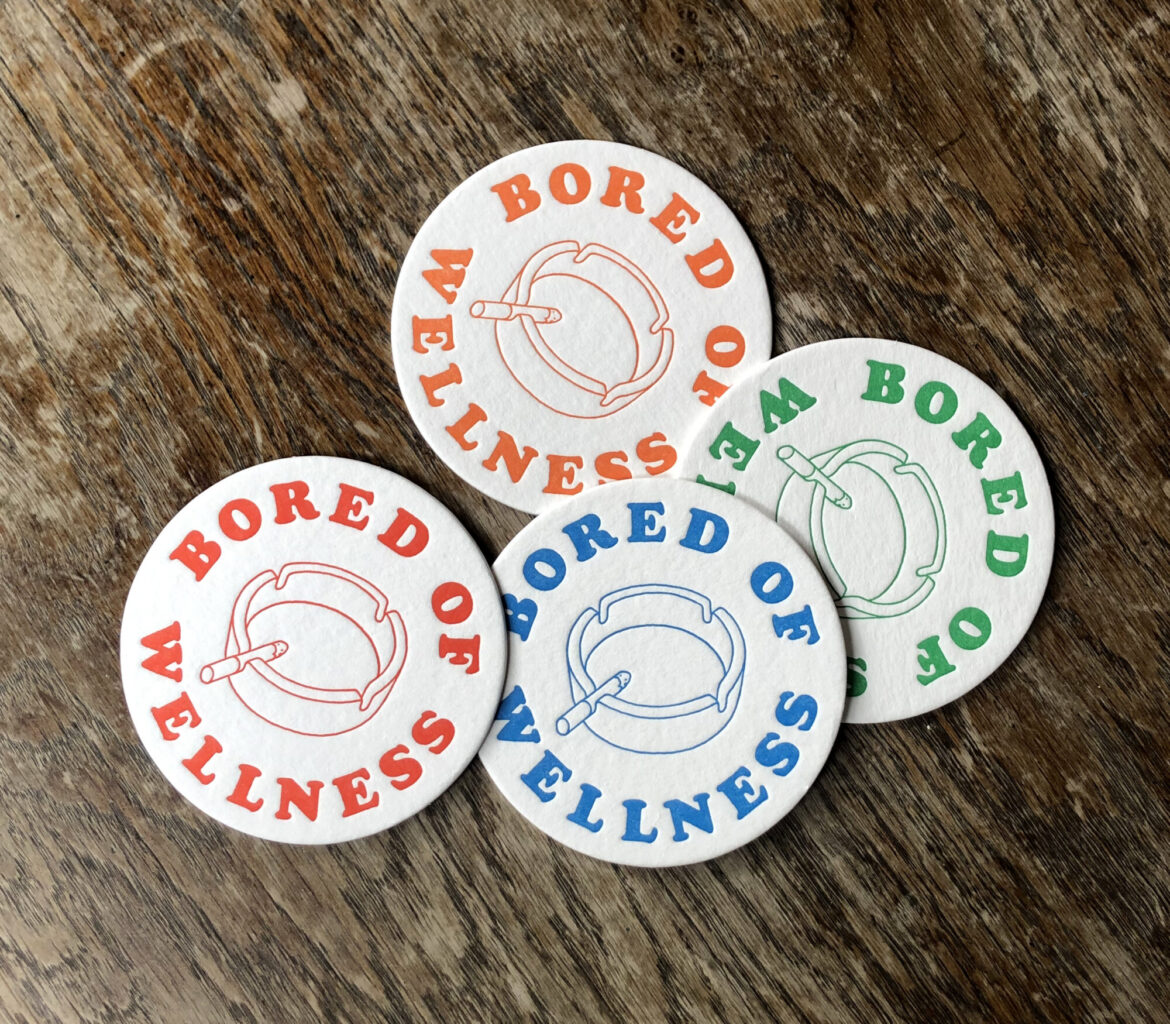
His work thrives on humour, often off the dark, gallows variety. During the pandemic, when the world was gripped by fear and uncertainty, Bingo feared jokes might seem callous. But the opposite happened. “People wanted laughs more than ever. I ended up doing well because I could make people laugh online. Entertainment is always needed.”
That realisation is key: humour is not frivolous; it’s essential to coping with life’s chaos. It’s a lesson he’s learned firsthand, and it informs his art and advice. “Whatever’s going on in the world, cost of living, crisis, wars, racism, people always want to be entertained.”
Packaging: From legal necessity to playful canvas
Bingo’s playful spirit extends to packaging design, a realm often seen as dull or purely functional. He applauds brands like Innocent and Oatly for injecting personality and humour into their packaging. Innocent’s “Fruit Towers” and cheeky contact details invite customers in, creating engagement rather than just transactions.
His own packaging projects reflect this ethos: unexpected, memorable, sometimes shocking. From a jigsaw puzzle with a swearing choking hazard illustration to F***ing Hell I’m Bored Of Covid Lager, Bingo uses humour to surprise and delight. “Packaging is boring a lot of the time. When you do something different, people notice.”
He also sees packaging as a tool for influencing behaviour, particularly recycling. The industry has struggled to motivate consumers to dispose of packaging properly. Bingo believes humour could help. “If you can make people laugh, you get their attention,” he adds. “People share funny things. It hits the conscience more than dry instructions.”

Risk, capitalism, and the price of playfulness
Bingo is frank about why most people don’t take creative risks: money. The capitalist system rewards safety and predictability, locking many into jobs and lifestyles that limit bold ideas. “Most people just want enough to eat, a roof over their head, and to support their family. Then maybe some extra to play with.”
He imagines a world without money where people would be “much more interesting” and daring. His own career is a rare example of embracing risk, quitting client work, running a Kickstarter with bizarre rewards like being told to “f*** off” on Christmas Day, and taking a year off to travel with no plan.
That year-long break was an experiment in letting go of control and expectations. He left London at 8:40pm on New Year’s Eve 2022 with a rucksack, surfacing a year later after adventures in Sri Lanka, Japan, and Cornwall. “It was a test to see what happens when you stop working and just live.”
The brand called Mr Bingo
Despite resisting the “brand” label, Bingo admits his personality is his business. His shop, his social channels, and his art are extensions of himself. “It’s all just me. That’s why it’s easy. I don’t have to fake anything.”
This authenticity is a lesson for companies: be true to who you are. If you’re a heritage brand, keep that tradition. If you’re a startup, invent your personality. Don’t fake it. “If you’re boring, be boring well. People trust that.”
He recalls the recent Jaguar rebrand that went down badly because people hate change. “People don’t like change, especially if it’s not authentic.”
Final thoughts: More play, less bullshit
At the core of Mr Bingo’s message is a call to play more, to be childlike, silly, and irreverent not just in art, but in life and business. “Life’s too short to be boring,” he says. “Laugh about everything. See the good in everything.”
You can see that philosophy alive every Friday at his London shop on Amwell Street. It’s a place where nothing is hidden, everything is a bit chaotic, and fun is mandatory.
So, whether you’re an artist, a brand, or just someone stuck in the corporate grind, take a page from Mr Bingo’s playbook: loosen up, be honest, connect with people, and for heaven’s sake, have some fun.
And if you’re ready to laugh, learn, and shake off the serious, come see Mr Bingo live at London Packaging Week 2025 on 15 & 16 October at the Excel.
Check out our socials
Lorem ipsum dolor sit amet, consectetur adipiscing elit Lorem ipsum dolor sit amet, consectetur adipiscing elit
The latest packaging projects
Industry leaders join Innovation Awards 2026 judging panel at London Packaging Week
London Packaging Week welcomes a new group of industry-leading judges for the 2026 Innovation Awards, setting the stage for the year’s most creative and sustainable packaging entries
London Packaging Week opens entries for Innovation Awards 2026
The Innovation Awards 2026 return to London Packaging Week, celebrating the boldest, most disruptive packaging designs shaping the future.