
Why perception now defines packaging innovation as much as precision
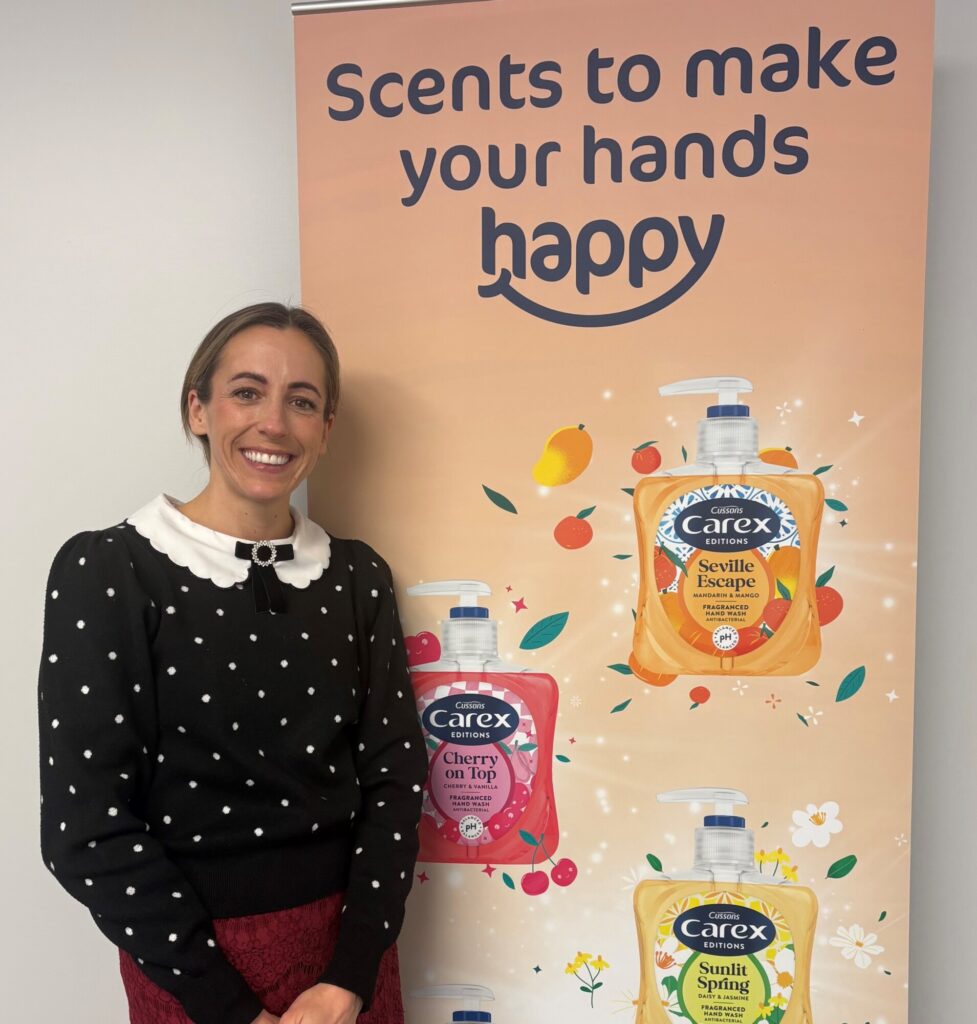
Carla Rae, Senior Procurement Manager at PZ Cussons, shares her insights on packaging innovation and her role as a judge for the London Packaging Week Innovation Awards.
When Carla Rae joined PZ Cussons just over four years ago, she stepped into a world that was entirely new. Her career had been rooted in food and drink manufacturing, where packaging was primarily functional and process-driven, but personal care demanded a sharper focus on both consumer experience and operational precision. Her previous international experience, including extended periods at a tuna processing plant in Mauritius, had familiarised her with complex, high-volume operations, but nothing quite mirrors the rhythm of a just-in-time factory in Salford, where bottles arrive every four hours and even minor delays can ripple through production.
Carla, Senior Procurement Manager at PZ Cussons, brings two decades of expertise across food, drink, personal care, and baby products. As a Member of the Chartered Institute of Procurement and Supply, she combines technical rigour with a practical sustainability lens, helping the business improve material specifications, reduce waste, and push for greater circularity while maintaining performance, compliance, and supply resilience. Her weeks are a blend of strategic oversight and hands-on problem-solving.
The art of managing a just-in-time factory
“The factory churns volume so quickly that we’re always reacting,” Carla explains. “A lot of my week is firefighting—making sure suppliers don’t arrive when we can’t offload them or handling changes on the M62 that delay deliveries.” Alongside these operational challenges, she negotiates major contracts spanning conversion, energy, labour, transport, and raw materials, all while keeping an eye on sustainability-focused projects. Whether checking in with Far East suppliers, liaising with marketing teams, or tracking queries from retailers and consumers, her role bridges multiple parts of the organisation.
Every decision, from preform weight to bottle integrity, has a tangible impact on production schedules, cost, and environmental performance. Carla underscores the balance between operational efficiency and strategic ambition. “We’re always facing time-scale challenges because the factory wants everything delivered immediately, but we have to think about longevity, sustainability, and consumer perception at the same time,” she says.
Small changes, big impact
While the sector rarely allows for unrestricted innovation in low-cost personal care, Carla is a firm believer in the power of incremental change. Tiny reductions in bottle weight might seem insignificant in isolation, but across millions of units, the impact is substantial both commercially and environmentally. “It might be reducing a bottle by two grams. Not much in isolation, but at scale, it makes a huge difference,” she explains.
These small adjustments are far from simple. They require careful negotiation with preform suppliers, considerations of blow-moulding integrity, and testing for product durability. “Are we willing to invest twenty or thirty thousand pounds to try a change for two grams? At millions of bottles, those grams matter,” she says. At PZ Cussons, incremental change is therefore not just a sustainability tactic but a complex interplay between design, performance, and cost. Every decision ripples across the supply chain, shaping how the factory operates, how materials are sourced, and how consumers perceive the final product.
Learning and collaboration
Education and collaboration are central to achieving these goals. Carla leads learning and development for her teams, bringing in vendors to explain packaging materials, label production, and line interactions. Operatives are trained to make informed, on-the-spot decisions, from quality control to root cause analysis. “Speaking a common language with vendors is critical. It’s about evidence, education, and clarity,” she says.
She also emphasises the importance of feedback loops with consumers, retailers, and internal sales teams to ensure packaging meets actual needs. “We should continually ask: did we truly give what they wanted? Did we fill the brief as intended?” This ensures that packaging decisions are guided not just by process, but by experience, expectation, and evidence. A pack that performs well operationally but fails to resonate with the consumer misses a critical part of its purpose, and Carla’s holistic approach ensures that function and experience are considered in tandem.
Sustainability as a system
Sustainability, however, is more than weight reduction or recyclability; it is about a product’s full lifecycle. Carla frames the challenge in circular terms. “It’s not just about whether a consumer can put it in their recycling. What happens next? Can it come back as a bottle? Is it food-grade? Are there refill options? Are caps recycled with the cap on, or cap off?”
By thinking in systems rather than isolated steps, Carla encourages the adoption of refillable packs, modular components, and closed-loop materials. “We’re always asking ourselves, what does this look like further down the line? Not just for us, but for the consumer as well. Can it be reused, refilled, or safely recycled? And can we make that process straightforward?” She also highlights the practicalities: “It’s one thing to design a pack that ticks boxes on paper, but it needs to work in our factory, with our just-in-time processes, and for the retailer too. If it doesn’t, it won’t succeed.”
For Carla, true sustainability requires foresight, collaboration, and continuous innovation, a philosophy that informs not just her work at PZ Cussons but her perspective on the broader industry. “It’s almost a bit of a ‘what next?’ not only for the packaging industry, but making it easier for consumers as well,” she adds. Every material choice, process change, and supplier engagement is viewed through a lens of environmental impact and practical feasibility, showing that sustainability is both an operational and design challenge.
Premium packaging and consumer perception
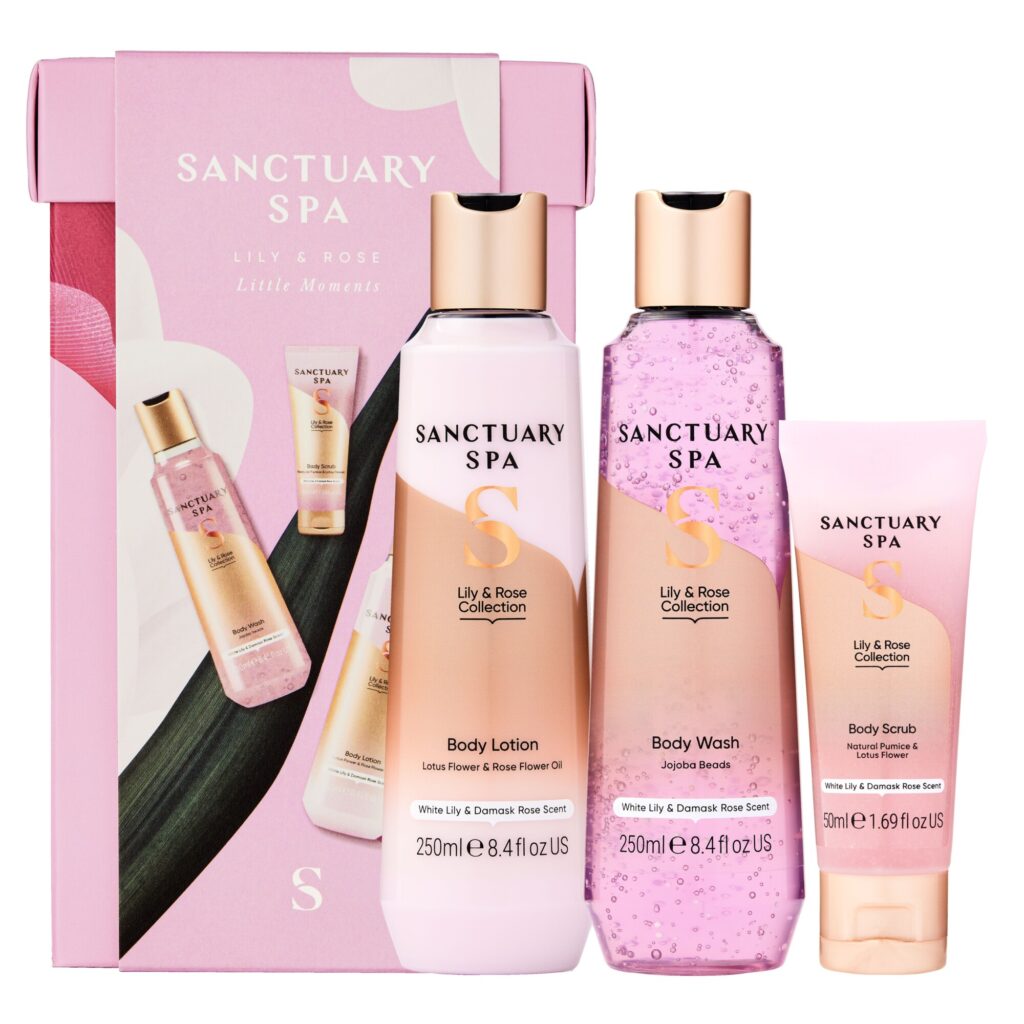
Premium ranges like Sanctuary Spa illustrate the delicate interplay between design, functionality, and brand perception. Gift packaging must mirror the quality and presentation of off-shelf products to ensure a consistent brand experience for first-time consumers. “We want to make sure that our gifting has the same packaging representation as what you can buy off the shelf,” Carla explains. Even subtle variations in structure, size, or finish can influence consumer perception, underscoring the importance of attention to detail in personal care.
In the luxury and premium segments, packaging is a key brand ambassador, shaping consumer expectation, communicating quality, and reinforcing trust. Carla also notes the tactile and sensory experience, reflecting her focus on interaction: “People pick up a bottle, they feel the label, they notice the weight. That moment alone can influence whether they come back or try something new.” These touchpoints are as operational as they are aesthetic, requiring close collaboration across marketing, product development, and supply chain teams to maintain consistency and integrity.
Innovation within constraints
For Carla, balancing innovation with feasibility is a constant, delicate act. New formulations, refreshed labels, or packaging upgrades can spark internal excitement and attract new consumer segments, but each initiative must align with operational realities and sustainability standards. “The bigger challenge is launching something completely new—new formulation, new packaging, or both,” she explains. Successful launches can broaden a brand’s appeal, bringing in different age groups and fresh consumers, but they demand meticulous planning, supplier negotiation, and rigorous testing. In personal care, meaningful innovation often starts in the details rather than in grand gestures.
True blue-sky innovation is limited in the category. “This is where my role in procurement supports our Research & Development function to evaluate these blue sky solutions commercially, for our brands at the price points they can achieve,” she notes. Instead, Carla focuses on incremental improvements that, cumulatively, create significant impact. She gives an example: “It could be reducing one of our bottles by two grams… Once we’ve created the preform, what about the bottle? Can the bottle be blown with the same mod? Shall we do a trial?” Each adjustment must navigate the intersection of consumer experience, operational feasibility, and sustainability.
“We can’t afford to affect the product integrity by going too far in lightweighting the bottle so that it affects the packaging function or impacts the consumer’s enjoyment of the product,” Carla adds. Even seemingly minor changes cascade through production, supply, and consumer use, requiring careful evaluation of technical performance alongside material efficiency.
Judging innovation
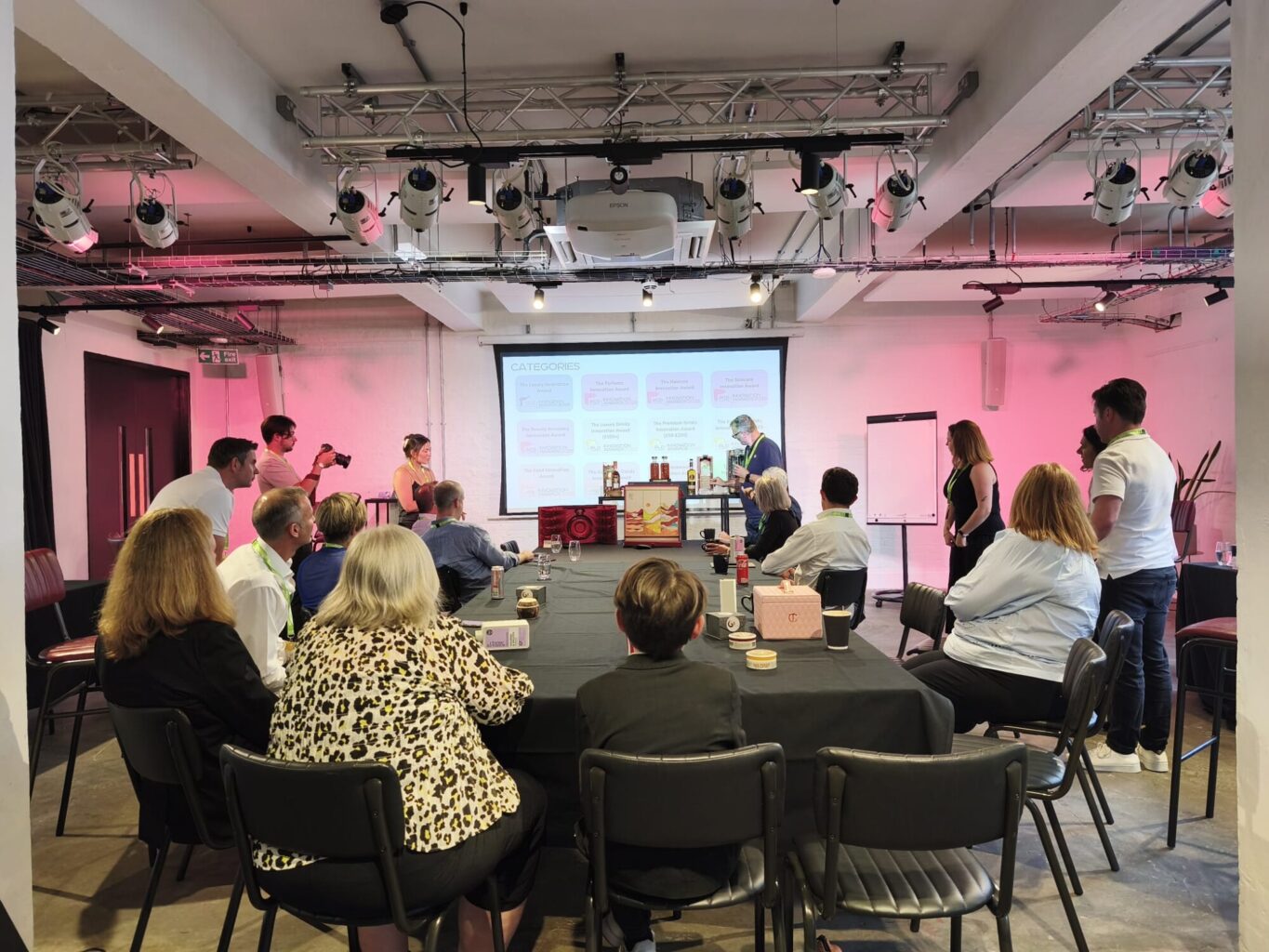
Carla brings all of this experience and insight to her role as a judge for the London Packaging Week Innovation Awards, which celebrate the UK’s most forward-thinking packaging across luxury, beauty, beverages, food, consumer goods, and sustainability. “It’s fantastic to be involved,” she says. “Even if you’re not a finalist, the opportunity to showcase something and get expert feedback is invaluable.”
Her perspective is rooted in how packaging interacts with people. “For me, it’s definitely a pack you want to reach out and touch,” she explains, highlighting the subtlety that goes into finishes, tactile varnishes, and structural cues. She’s drawn to designs that challenge assumptions, transforming what appears lightweight into something unexpectedly substantial, or what seems chunky into an easy-to-handle product.
Yet innovation must remain practical. A pack can be beautiful, but if it cannot withstand repeated use, integrate with a just-in-time production line, or remain commercially viable, it will not succeed in the real world. Carla laughs as she sums up the balance she admires in awards entries: “Done in a sustainable way that services our factory and doesn’t cost the earth… yes, please. I’ll take six million of them.” For her, the most compelling entries are those that marry design ambition, consumer experience, and operational reality—a trifecta that demonstrates both creativity and executional excellence.
Seeing the bigger picture
The London Packaging Week Innovation Awards are just one part of the broader event, taking place on September 16 & 17, 2026 at Excel London. For Carla, the show itself is a rare opportunity to step back from her day-to-day role in production and procurement and immerse herself in the wider industry. “Even anecdotal feedback from a colleague or a snippet from a stand can spark an idea or a solution that we bring back into our own business,” she explains. The halls are alive with creativity, technical innovation, and collaborative energy, offering insights that extend far beyond the awards themselves. For Carla, the experience reflects her daily approach to packaging, combining strategic insight, operational know-how, and consumer-focused thinking—while also enabling her to champion innovation across the broader UK industry.
With leaders like Carla driving change, and platforms like the London Packaging Week Innovation Awards spotlighting excellence, the future of packaging is tactile, thoughtful, and increasingly circular. The window is now open for the next wave of innovation, with entries for the 2026 awards closing on 24 April.
Check out our socials
Lorem ipsum dolor sit amet, consectetur adipiscing elit Lorem ipsum dolor sit amet, consectetur adipiscing elit
The latest packaging projects

From intention to impact: Designing emotion into luxury packaging
Vincent Villéger reflects on the growing role of intentionality in luxury packaging design, and how precision, psychology, and brand clarity are shaping a more considered creative landscape.
Stylish, modern and accessible. Inclusive design is a smart commercial decision
What use is packaging if it alienates a big portion of users? As some of the most forward-thinking brands in beauty, tech and beyond are discovering, designing with empathy and accessibility front of mind isn’t a constraint, but a competitive edge. Casey McHugh, Conference & Community Manager at Easyfairs, explains why.