
Championing fibre-based innovation in the face of packaging Extended Producer Responsibility (pEPR)

When London Packaging Week returns next month, it will once again provide a vital platform for brands, converters, policymakers and innovators to tackle the biggest challenges shaping the future of packaging. Among the most pressing this year is the interaction between regulation and innovation—particularly the UK’s packaging Extended Producer Responsibility (pEPR) scheme, which has sparked widespread debate across the fibre-based packaging sector.
Few people are better placed to unpack this issue than Talia Goldman, ESG Director – Europe & UKI at Colpac and Sabert and Co-Chair of the Alliance for Fibre-Based Packaging. Ahead of her appearance at London Packaging Week, Goldman shared her perspective on why fibre-based packaging is under pressure, how industry is pushing back, and where innovation is making the difference.
Fibre-based composites under pressure
At the centre of the discussion is the way pEPR treats fibre-based composites (FBCs). These materials, which combine paperboard with functional coatings, have become a critical innovation in reducing unnecessary plastics. They provide the barrier properties needed for food packaging, resisting grease, enduring chilled storage and even tolerating heat, while significantly reducing reliance on fossil-based materials. Yet, as Goldman points out, the system is weighted against them.
“Fibre-based composites are critical to balancing functionality with sustainability,” she explains. “They’ve enabled brands to reduce plastic use where necessary,without sacrificing performance. Yet the current fee structure penalises these innovations. While plastic base fees decrease by 13%, FBCs become the most expensive option, despite their potential to replace a large portion of fossil-based plastic packaging.”
The problem is further compounded by weight. Fibre is often heavier than plastic, driving up compliance costs based on weight, rather than on recyclability or overall life cycle impact. To mitigate this, Colpac and Sabert have redeveloped packs, streamlining materials, and pioneering innovations, such as direct food contact inks – a technology developed at our Colpac site in Flitwick that offers the necessary resistance and visual quality without resorting to plastic laminates.

Driving policy change
If the commercial pressures are difficult, the regulatory landscape can feel even more so. Goldman’s role as Co-Chair of the Alliance for Fibre-Based Packaging has brought her into direct dialogue with government on the flaws in the current system. “What we need is a smarter pEPR,” she says. “One that considers the full carbon impact of packaging and ensures the funds raised are reinvested in recycling infrastructure. At the moment it fails on both counts.”
The Alliance has built a wide-ranging advocacy programme: engaging directly with Defra and PackUK, interrogating the datasets that underpin decision-making, and collaborating with waste managers to understand and improve recyclability in practice. Among its priorities are fairer fee structures for FBCs, increasing the plastic content threshold from 5% to 10%, and removing the exclusion of cups as a waste stream format.
There have been early wins. The reporting threshold for FBCs has already been raised to 5%, and the Alliance now holds monthly meetings with Defra—an engagement that simply didn’t exist a year ago. Its members sit on government working groups, from the Recyclability Assessment Methodology Technical Advisory Committee to material switching forums, and have helped to delay the Scotland paper cup levy to allow further consultation. “These are incremental changes, but they matter,” Goldman reflects. “They show government recognises the need to engage directly with our sector.”
Innovation aligned with recycling realities
Policy may provide the framework, but innovation is what allows businesses to act. One of Colpac’s most celebrated examples is the development of direct food contact inks. After six years of development, Colpac co-launched a paper only platter base in 2024, using Sun Chemical’s direct food contact inks and varnishes instead of laminated coatings. The inks, vegetable-based and mineral oil-free, delivered both the protective barrier and the colour intensity required for foodservice, while making the platter fully recyclable in standard paper re-pulping processes.
The impact was tangible: a 55% reduction in projected pEPR unit costs, and an award for New Packaging at the Sammies in 2025. “It was the first project of its kind in foodservice,” Goldman says. “It shows what can be achieved when innovation is guided by recyclability constraints.”
Colpac and Sabert have long designed with recyclability in mind, aligning products with OPRL guidelines and the Recyclability Assessment Methodology. Their designers visit waste facilities, test products alongside site managers, and work to integrate practical insights into every new launch. That collaboration has become even more important now that pEPR formalises restrictions like the 5% plastic threshold, which can determine the fate of an otherwise recyclable pack.
Building trust from source to shelf
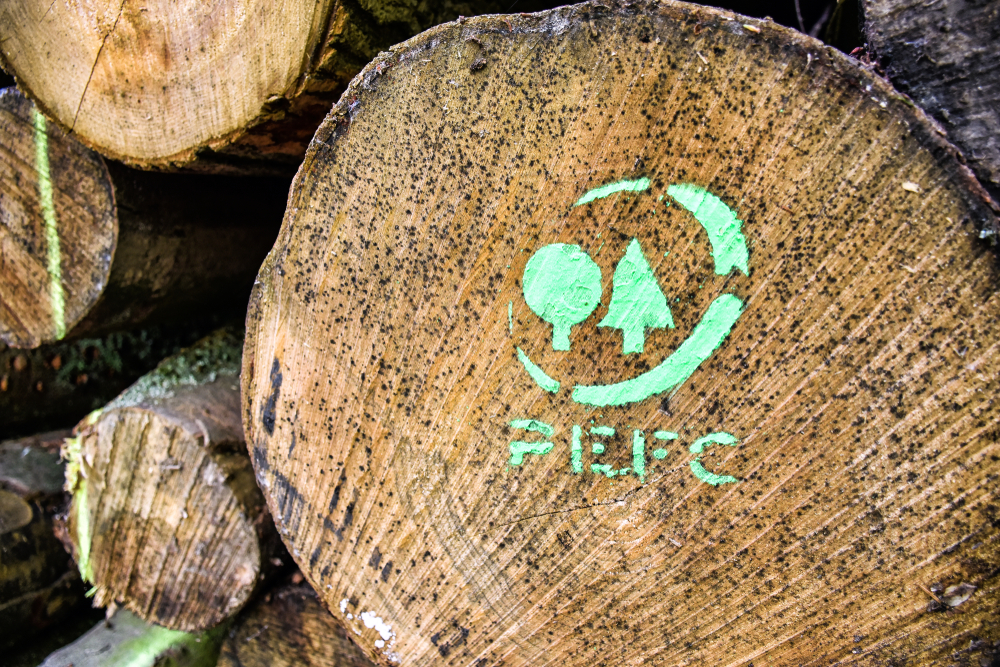
Sustainability doesn’t start at the point of disposal, it begins with how materials are sourced. For Colpac and Sabert, fibre traceability is a core commitment. The businesses utilise FSC® and PEFC-certified board where possible, and are preparing their supply chains for the upcoming EU Deforestation Regulation, which will require even tighter due diligence to keep products linked to deforestation off the European market. “We’re working with suppliers now to submit the necessary documentation,” Goldman explains. “Customers need the reassurance that materials meet the required standards.”
But responsible sourcing is only one piece of the puzzle. Even the most innovative pack must be recycled correctly to achieve its potential. To support this, Colpac and Sabert place emphasis on consumer engagement. QR codes on packs and product webpages provide clear recycling and composting guidance, tailored for markets including the UK, France and Italy. “Education is a vital piece of the sustainability puzzle,” Goldman says. “The most innovative packaging still needs to be disposed of correctly to achieve its potential.”
That same sense of responsibility extends to Colpac and Sabert’s operations. All our sites have the highest of quality standards, meeting and often exceeding the requirements of BRCGS and other international accreditations. In 2025 our Colpac site achieved a BRCGS AA+ audit grade for the second year running, the highest available, under unannounced conditions. The audit team praised the company’s compliance discipline, while customers invited to observe the process first-hand were reassured by the standards in place. “It was a moment of real pride,” Goldman recalls. “It showed that our operational standards match our sustainability ambitions.”
Meeting growing market demand
That credibility is increasingly important as demand for sustainable packaging continues to rise, particularly in foodservice and retail. The greatest growth, Goldman observes, is in solutions designed to keep plastic content below 5%, a threshold that means packs qualify as paper and board rather than FBCs under pEPR. The Colpac site’s pioneering work with direct food contact inks positions it well to meet this demand, and the company is already seeing strong interest.
Sabert’s acquisition adds further momentum. “We’re excited about what Sabert brings in terms of scale and ambition,” Goldman says. “Working as one team, leveraging the combined expertise from our colleagues and partners globally, we can move even faster in bringing fibre-based innovation to market.”
As London Packaging Week approaches on the 15-16 October at the Excel London, Goldman is keen to emphasise the importance of collaboration. “Events like this matter,” she concludes. “They bring together brands, policymakers, waste managers and converters to solve problems collectively. Packaging sustainability can’t be tackled in silos. We need everyone at the table.”
With pEPR reform, fibre recyclability and innovative design firmly on the agenda, London Packaging Week promises to be a key forum for debate this September. To hear directly from Talia Goldman and other industry leaders, and to play a part in shaping the future of packaging, register now to attend London Packaging Week.
Check out our socials
Lorem ipsum dolor sit amet, consectetur adipiscing elit Lorem ipsum dolor sit amet, consectetur adipiscing elit
The latest packaging projects

London Packaging Week smashes attendance record with 16% growth in 2026
A record 6,688 unique visitors attended London Packaging Week 2026, as more than 230 exhibitors and over 110 speakers helped deliver the biggest edition in the event’s history.

Prada, Jack Daniel’s, Heinz and Hotel Chocolat among London Packaging Week Innovation Awards winners
From Formula 1-inspired luxury engineering and interactive launch packs to everyday usability and recyclable flexible packaging, the 2026 London Packaging Week Innovation Awards reveal how brands are turning packaging into a source of practical, commercial and consumer value.