From intention to impact: Designing emotion into luxury packaging

Vincent Villéger reflects on the growing role of intentionality in luxury packaging design, and how precision, psychology, and brand clarity are shaping a more considered creative landscape.
Packaging begins long before it is touched. It exists first as a sequence, a choreography of moments that unfold in the mind before they ever materialise in the hand. In luxury, where expectation is heightened and detail is everything, this sequence becomes the design itself.
It is a way of thinking that increasingly defines the conversations shaping the industry, conversations brought into sharp focus at London Packaging Week 2026, returning on 16 & 17 September 2026 at Excel London. Here, across Halls S2 & S3, brands, designers, and suppliers converge to test ideas, explore materials, and translate ambition into something tangible. Packaging is not simply presented; it is interrogated, refined, and reimagined in real time. Within this environment of exchange and experimentation, a quieter shift is taking place across the industry, one defined not by excess, but by intention.
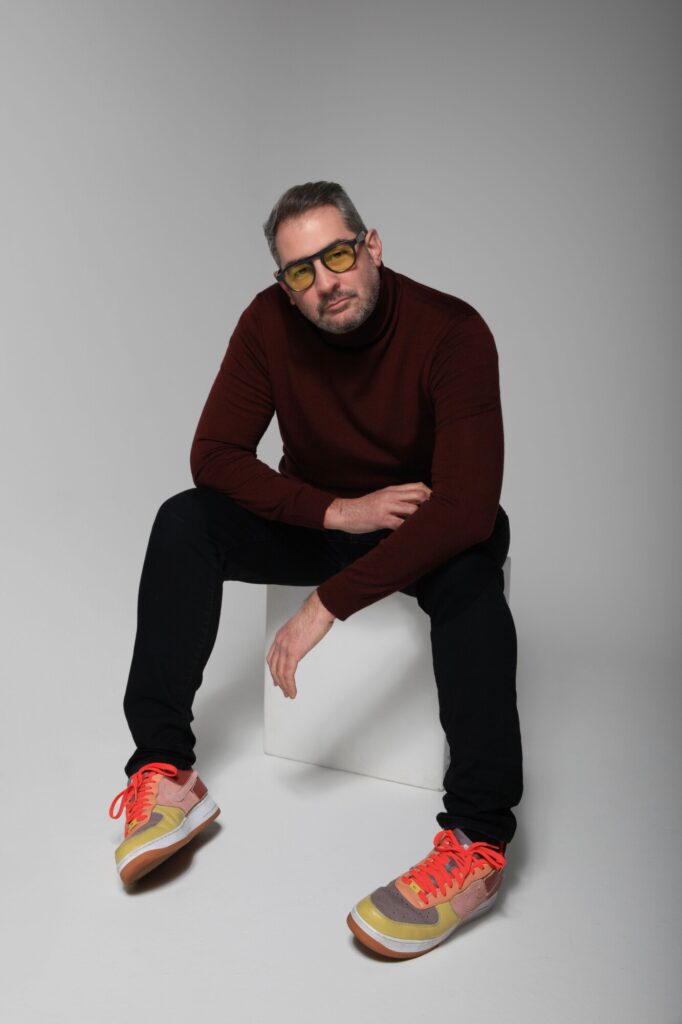
Vincent Villéger, an independent product, retail and packaging designer with over 25 years’ experience across the luxury and beauty sectors and a regular attendee of London Packaging Week, explains that control has long been central to his approach. “Control is very important in any aspect of what you do as a brand, and it’s always been part of my approach,” Vincent explains. What is changing now is its visibility. “It’s great that you’re noticing it becoming more widespread, because I think it’s going to lead to a better output.”
This control manifests not in aesthetics alone, but in experience. “When I design a piece of jewellery packaging, for example, I design the experience,” he says. Every decision is deliberate, from the first visual cue to the final reveal. “What do you want to see first? What element of surprise do you want when you first open the box? Do you want to see the invoice… or do you want to see that ring you’ve been dreaming about for the last five years?”
These are not minor considerations. The way packaging is designed can provoke emotional responses in consumers, and every element must be carefully considered. “That sequence of events, the colours, the materials, the tactility, these are all conscious decisions.” Packaging, in this sense, becomes a controlled emotional response. “When somebody interacts with their packaging, they feel a certain way because that’s the way, as a designer, I decided I wanted them to feel.”
Designing the invisible
Behind every physical object lies an invisible framework of decisions. The challenge, Vincent suggests, is not creativity itself, but direction. “When you’re faced with a blank page, there are an infinite number of decisions you could be making… understanding the DNA of a brand is an essential part of distilling those options.”
It is this distillation that defines true luxury design. A solution cannot simply be transferred from one brand to another. “You couldn’t design a packaging solution for one brand, swap the logo, and expect it to work for another. If you can do that, you probably haven’t dug deep enough.”
What emerges is a discipline that sits between art and science. “It’s not an exact science, but it’s not entirely an art form either,” he reflects. “There are precise objectives you’re trying to achieve… but we design with a fair understanding of what we’re trying to achieve.”
Emotion, in this context, becomes something that can be engineered. “If you want to create surprise, you introduce something unexpected… like a jump scare in a movie.” Reassurance, by contrast, is grounded in weight and solidity, signals of permanence and value. Wonder, meanwhile, might be achieved through light, reflectivity, or even sound.
“There’s artistry, but there’s also an understanding of human psychology and behaviour,” Vincent explains. “And then you pair that with knowledge of production methodologies and materials. That’s the toolbox.” It is this combination, creative instinct and technical fluency, that enables ideas to move from concept to reality.
Measuring what matters
Success in packaging design is often intangible, but for Vincent, it begins with fidelity. “My first yardstick is how close to the vision it is when we’re finished with it.” The ambition is simple: that what reaches the shelf remains true to the original idea.
“It means it will succeed or fail by what I want it to be, rather than by accident,” he says. In an industry where compromise is often inevitable, this alignment becomes a form of integrity.
Longevity offers a second measure. Designs that endure, remaining central to a brand over years rather than seasons, signal something deeper than trend. “If something lasts, it’s usually because it’s good,” he notes, pointing to past work that continues to define brand identity nearly a decade on.
Yet design does not exist in isolation. “It has to be supported by the brand,” he adds. Without continued investment, even the most considered work risks fading into irrelevance.
Aligning ambition
If intentionality defines the creative process, alignment defines its success. Modern packaging projects are shaped by competing demands, creative, commercial, sustainable, operational, and rarely do they sit in perfect harmony.
“A good pack will tick the majority,” Vincent says. But achieving even that requires clarity from the outset. “What are we trying to achieve? What boxes are we trying to tick?”
Too often, those answers are fragmented. “I’ve had meetings where I ask three senior managers the same question… and get three different answers.” Without early alignment, projects become reactive, pulled in multiple directions.
This is where the role of the designer expands beyond creation into facilitation. Establishing shared objectives early transforms subjective debate into measurable outcomes. “You want to be in a position where you can say we’ve achieved this objective or we haven’t.”
In an ideal world, every ambition would be realised, creative excellence, commercial success, sustainability, efficiency. In reality, priorities must be defined and balanced. The shape of those priorities ultimately determines the shape of the final design.
A shifting definition of luxury
All of this is unfolding against a broader backdrop of change. Economic pressure, supply chain disruption, and evolving consumer expectations are reshaping what luxury means, and how it is expressed.
“The context at the moment makes things difficult for everyone,” Vincent acknowledges. Yet within that challenge lies opportunity. “I’d like to think it creates a breeding ground for optimism… that brands would seize the opportunity to give consumers things to be happy about.”
There are signs of this shift already. Across curated showcases and industry platforms, a different energy is emerging, one that embraces expression alongside restraint. “There’s an appetite not only for newness, but just a little bit of happiness.”
It reveals itself in unexpected ways: flashes of fluorescent colour, humour, bold formats, and moments of lightness, even in traditionally restrained categories. “I think we need more of that.”
And it is precisely this balance, between intent and expression, control and creativity, that continues to define the conversations at London Packaging Week. As a global stage for packaging innovation, the show brings together brands, designers, and suppliers to turn ideas into reality, where ambition is tested, materials are explored, and the future of packaging is shaped in real time.
In a landscape defined by constraint, it is perhaps this, intentional, considered joy, that will define what comes next.
Check out our socials
Lorem ipsum dolor sit amet, consectetur adipiscing elit Lorem ipsum dolor sit amet, consectetur adipiscing elit
The latest packaging projects
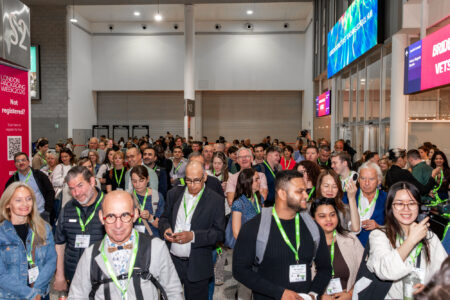
London Packaging Week smashes attendance record with 16% growth in 2026
A record 6,688 unique visitors attended London Packaging Week 2026, as more than 230 exhibitors and over 110 speakers helped deliver the biggest edition in the event’s history.
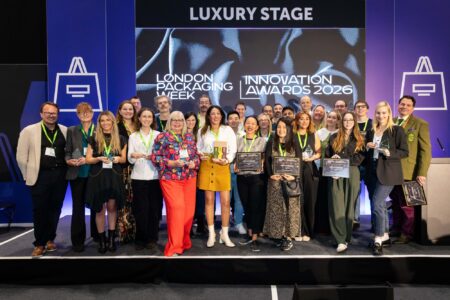
Prada, Jack Daniel’s, Heinz and Hotel Chocolat among London Packaging Week Innovation Awards winners
From Formula 1-inspired luxury engineering and interactive launch packs to everyday usability and recyclable flexible packaging, the 2026 London Packaging Week Innovation Awards reveal how brands are turning packaging into a source of practical, commercial and consumer value.